
International Development
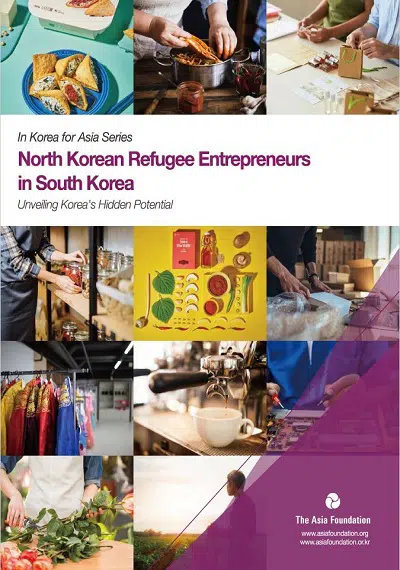
Virtual Event – Insights from North Korean Refugee Entrepreneurs
Washington, DC, Thursday, February 4, 2021
Events Post
Seventy-five years after the onset of Asia’s Cold War, the world remains focused on the geopolitics of inter-Korean relations. Meanwhile, an emerging community of more than 33,000 refugees from North Korea currently live in South Korea; half aspire to become entrepreneurs. Despite the potential insight the refugee community could offer, there is in… Read more
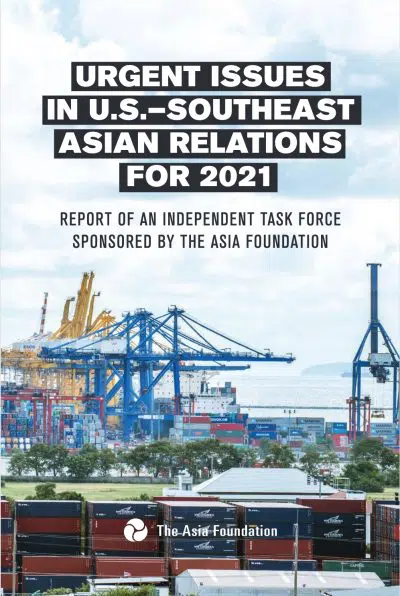
Virtual Event – The Asia Foundation Taskforce Report: Urgent Issues in U.S.-Southeast Asian Relations
Washington, DC, Tuesday, February 2, 2021
Events Post
Southeast Asian leaders are accustomed to fluctuating levels of attention from the United States, but U.S. policy for Southeast Asia in the past four years might be described as more than a fluctuation. Changes in diplomatic direction and trade policy have led to a loss of U.S. focus and influence in the region, while heightened U.S.-China tensions… Read more
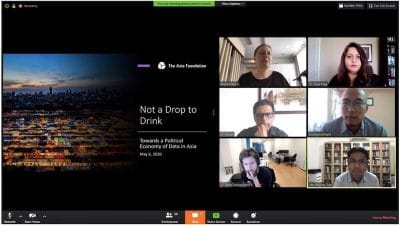
Asia Foundation’s Political Economy of Data Workshop at Global Digital Development Forum
May 15, 2020
News Post
The international development community is adapting to the new challenges and opportunities presented by a growing digital ecosystem and digital data. As part of the Global Digital Development Forum virtual conference on May 6, The Asia Foundation hosted the “Not a Drop to Drink: Towards a Political Economy of Data in Asia” workshop. The Global Dig… Read more
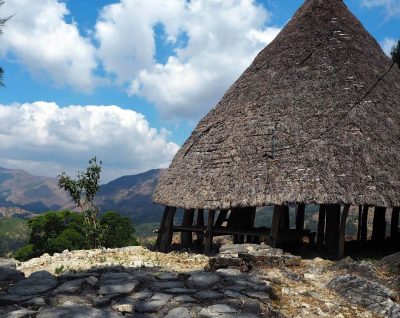
Growing It Alone: Images of Rural Timor-Leste
November 6, 2019
Blog Post
Just a little over two months ago, Timor-Leste celebrated the 20th anniversary of the referendum that brought the country its independence. The Asia Foundation’s governance director, Nicola Nixon, sends these reflections from a visit to a project site in the historic town of Maubisse, 70km from the capital. View to the hills outside Maubisse, Timor… Read more
Monitoring, Evaluation, and Learning in Adaptive Programming: Expanding the State of the Art
September 12, 2018
Blog Post
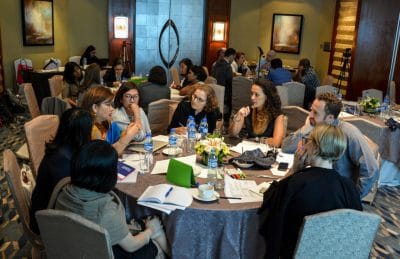
No matter how you slice it, implementing a project in the field of international development ultimately boils down to this: is the project helping the people it intends to reach, and how do you know? That translates directly into the essential nuts and bolts of project management and how to measure results. Are you achieving what you had hoped? How… Read more
Devex: What Role is There for Development Actors in Thailand?
February 5, 2018
Media Coverage Post
Devex features an in-depth interview with Thomas Parks, The Asia Foundation’s country representative in Thailand, on the role of international development actors in Thailand. Asia Foundation has worked in Thailand since 1954, adapting its program as the country rapidly developed: “Today, Thailand doesn’t need the support or kind of things we do in… Read more

A Conversation with Dr. Rajiv Shah
April 29, 2015
Blog Post
Recently retired after five years at the helm of USAID, Rajiv Shah brought new energy and improved morale, and earned bipartisan Congressional support as director of the United States’ premier development agency. Shah emphasized measurement, transparency, and outcomes in development spending, and he championed the idea that development dollars should build local institutions within developing countries.
A New Era of Development Finance
February 11, 2015
Blog Post
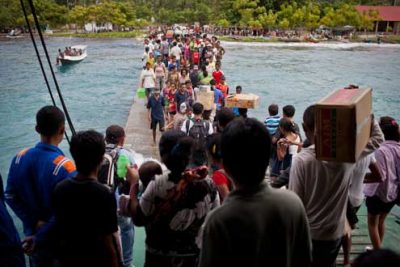
The global development landscape has changed dramatically in the last 15 years. In 2000, bilateral Development Assistance Committee (DAC) donors (UK, U.S., Japan, France) and multilateral institutions like the World Bank dominated the provision of aid. Today, the face of aid is increasingly Asian.
One Year After Bohol Earthquake, Partnerships Thrive Amid Rehabilitation Efforts
October 15, 2014
Blog Post
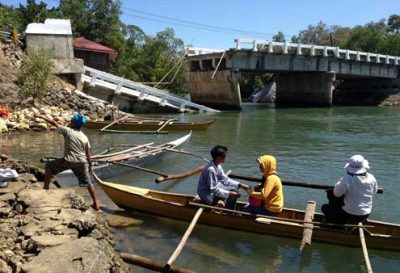
One year ago today, an earthquake reported to have the energy equivalent of 32 Hiroshima bombs struck Bohol and nearby provinces in south central Philippines. Generated from a fault in the northwestern sector of Bohol Island, the earthquake registered 7.2 on the Richter scale…
One Year After Siege, Zamboanga Critical to Success of Any Peace Agreement
September 10, 2014
Blog Post
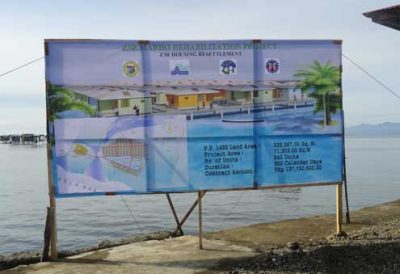
On Sept. 9, 2013, Zamboanga City woke to an unfolding nightmare. Some 200 Moro National Liberation Front (MNLF) fighters under the charismatic commander Ustadz Habier Malik had landed. They professed, despite the fact that they were fully armed, an intention merely to have a peaceful march in support of independence for Muslim-dominated areas in the southern Philippines. When government security forces halted their march, MNLF forces took hostages as a string of human shields, tying them together with rope. As a nightmare, this was a recurrence…
Subnational Conflict: New Approaches Needed
August 13, 2014
Blog Post
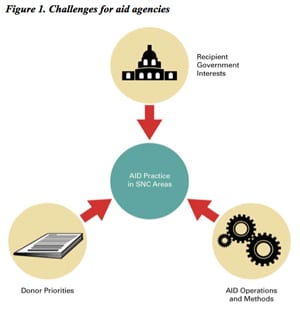
In last week’s In Asia, I examined how the rise of Asia in recent decades has been accompanied by a growth in deadly subnational conflicts (SNCs). These conflicts are occurring across the continent, including in middle-income and otherwise stable states. Democratization has not been a cure. Asia’s subnational conflicts last twice as long as those elsewhere in the world.

Conversation with Burmese Publisher, Library Advocate U Thant Thaw Kaung
July 9, 2014
Blog Post
Publisher U Thant Thaw Kaung, head of the Myanmar Book Aid and Preservation Foundation and the mobile library project under the Daw Khin Kyi Foundation, recently visited The Asia Foundation’s headquarters in San Francisco as part of a three-week study tour…
The Yolanda Tragedy: 7 Lessons in Early Emergency Response
November 20, 2013
Blog Post
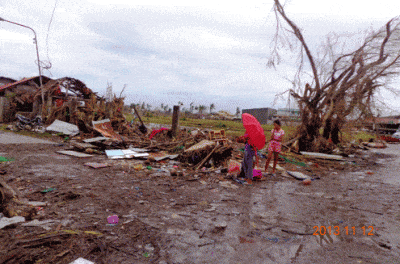
Last month, when the 7.2 earthquake struck the Philippine provinces of Cebu and Bohol, I was in the southern city of Zamboanga facilitating dialogues between Muslim and Christian leaders to alleviate possible religious tension following the September siege that displaced thousands and threatened the good relationship of the city’s two faith communities. It was the furthest thing from my mind that an even more devastating disaster would happen just a month later, right in Tacloban City, where I had left my wife and kids in safety (or so I thought) and in the province of Eastern Samar where I grew up playing in the gentle edges of the mighty Pacific Ocean.
Despite Double Disasters, Bohol’s Local Response Strong
November 20, 2013
Blog Post
Less than one month after a magnitude 7.2 earthquake destroyed areas of Bohol province in the Central Visayas region of the Philippines, Typhoon Yolanda (international name Haiyan), said to be one of the most powerful storms ever to hit land…
The Contested Corners of Asia: Subnational Conflict and International Development Assistance
October 7, 2013
Publication
Subnational conflict is the most widespread, enduring, and deadly form of conflict in Asia. Over the past 20 years (1992-2012), there have been 26 subnational conflicts in South and Southeast Asia, affecting half of the countries in this region. Concerned about foreign interference, national governments limit external access to conflict areas by jo… Read more
Civil Society More Ready Than Ever to Play Role in Forging Peace in Mindanao
February 20, 2013
Blog Post
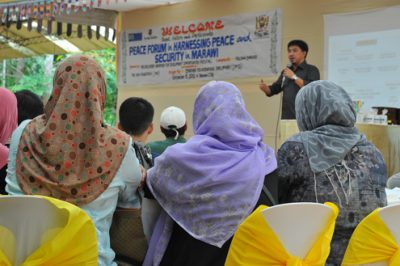
In a study I wrote a number of years ago, I quoted a peace activist in Mindanao lamenting the lack of success in ending the war between the government and the Moro Islamic Liberation Front (MILF). He was speaking in the wake of President Estrada’s 2000 “all-out war” offensive that overran fixed positions of the MILF.
Proving that Good Governance is Good Politics: A Tribute to Secretary Jesse Robredo
August 22, 2012
Blog Post
Secretary of the Department of Interior and Local Government (DILG) Jesse Manalastas Robredo – a highly-regarded, multi-awarded public servant, and an internationally recognized expert in local governance – died after the small plane…
Legislating Against Witchcraft Accusations in Nepal
August 8, 2012
Blog Post
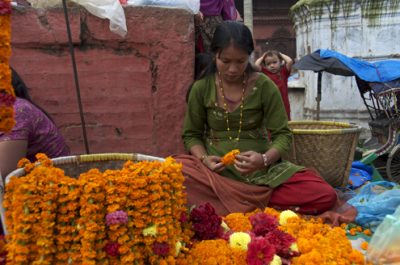
In Nepal’s Chitwan District, a 40-year-old widow and mother of two was
How Do You Get Reform in a Country Like the Philippines?
April 25, 2012
Blog Post
In previous posts, the nature of politics in the Philippines has been explored from many angles. We’ve examined the history of a weak state, how local politicians have difficulty making a national impact, and trials and techniques of Philippine presidents in the face of this situation.
Taking a Hard Look at Formal and Informal Justice Systems in the Philippines
April 11, 2012
Blog Post
It is always exciting to be able to take a break from program implementation to think more deeply about the theories that underlie development practice on the ground. That is of course the whole point of a teaching sabbatical, and it is what we both enjoyed about the “Experts’ Roundtable on Local-Level Justice in Conflict-Affected and Fragile Regions.”…
Asia: The World’s Most Water-Stressed Continent
March 21, 2012
Blog Post
Tomorrow is World Water Day. Tragically, by the end of the day, 4,300 children somewhere in the world will have died because of contaminated water and poor sanitation. That’s one child every every 20 seconds. This is an appalling statistic, but still represents a marked improvement from 12 years ago…
Early Feminism in the Philippines
March 7, 2012
Blog Post
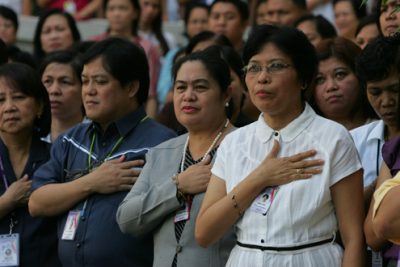
The Philippines has been noted as having one of the smallest gender disparities in the world. The gender gap has been closed in both health and education; the country has had two female presidents…
Have Philippine Presidents Overcome the Governance Impact of the ‘Hollywood Years?’
February 15, 2012
Blog Post
The Philippines has many cultural similarities to the rest of Southeast Asia. Some similarities, take cockfighting for example, puzzle some Filipinos and give great pride to other Filipinos (particularly males). Cockfighting is pre-colonial (as the chronicler of Magellan’s voyage when it arrived in the Philippines, Antonio Pigafetta observed) and is shared with Southeast Asia…
The Philippines in the Context of Southeast Asia’s History
February 8, 2012
Blog Post
One of the interesting things about team-teaching a course on “The Domestic Politics of Southeast Asia: The Philippines and Thailand” is that I myself have never taken a course on Southeast Asia. I was an American politics specialist as a graduate student, with a dissertation on “Interpretation and American Electoral Studies.” On the Philippines in particular…
U.S. Military and the Philippines: What do Philippine Citizens Really Think?
February 1, 2012
Blog Post
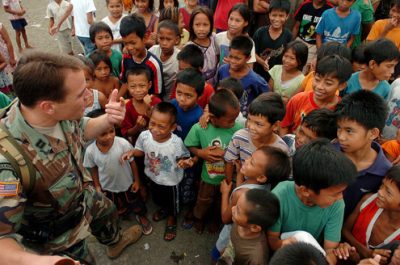
No sooner did I warn in last week’s blog on my way to Washington, D.C., that there is “a danger that U.S.-Philippine relations will be viewed entirely through the lens of ‘the rise of China'” than I was greeted upon arrival by the morning front-page story in The Washington Post entitled, “Philippines may allow greater U.S. military presence in reaction to China’s rise.” The article stated that “the sudden rush by many in the Asia-Pacific region to embrace Washington is a direct reaction to China’s rise as a military power and its assertiveness in staking claims to disputed territories, such as the energy-rich South China Sea.”
Social Media in the Philippines is Widespread, but what is its Impact?
October 12, 2011
Blog Post
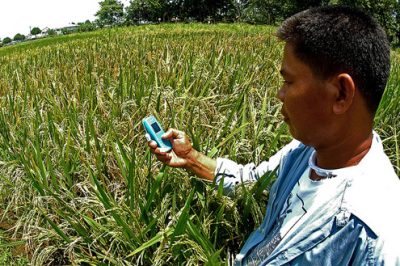
The Philippines long had a terrible reputation for telecommunications, with Singapore’s Lee Kuan Yew famously saying that in 1992, 99 percent of the population in the Philippines was waiting for a phone and 1 percent was waiting for a dial tone. However, beginning with the administration of Fidel Ramos (1992-1998) and followed by President Estrada (1998-2001), the telecoms industry was liberalized, and phone ownership skyrocketed.