
Laos
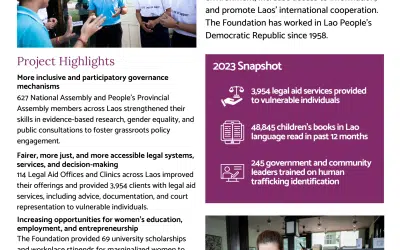
In Laos, we work with local partners and the Lao government to improve governance and access to justice for all citizens, advance women’s rights and opportunities, help communities manage development of and safeguard their natural environment, increase access to information, and promote Laos’ international cooperation.
 Todd Wassel
Contact
The Asia Foundation – Laos
P.O. Box 8032
Vientiane, Laos
Tel: +856 (21) 454-300
Email: [email protected]
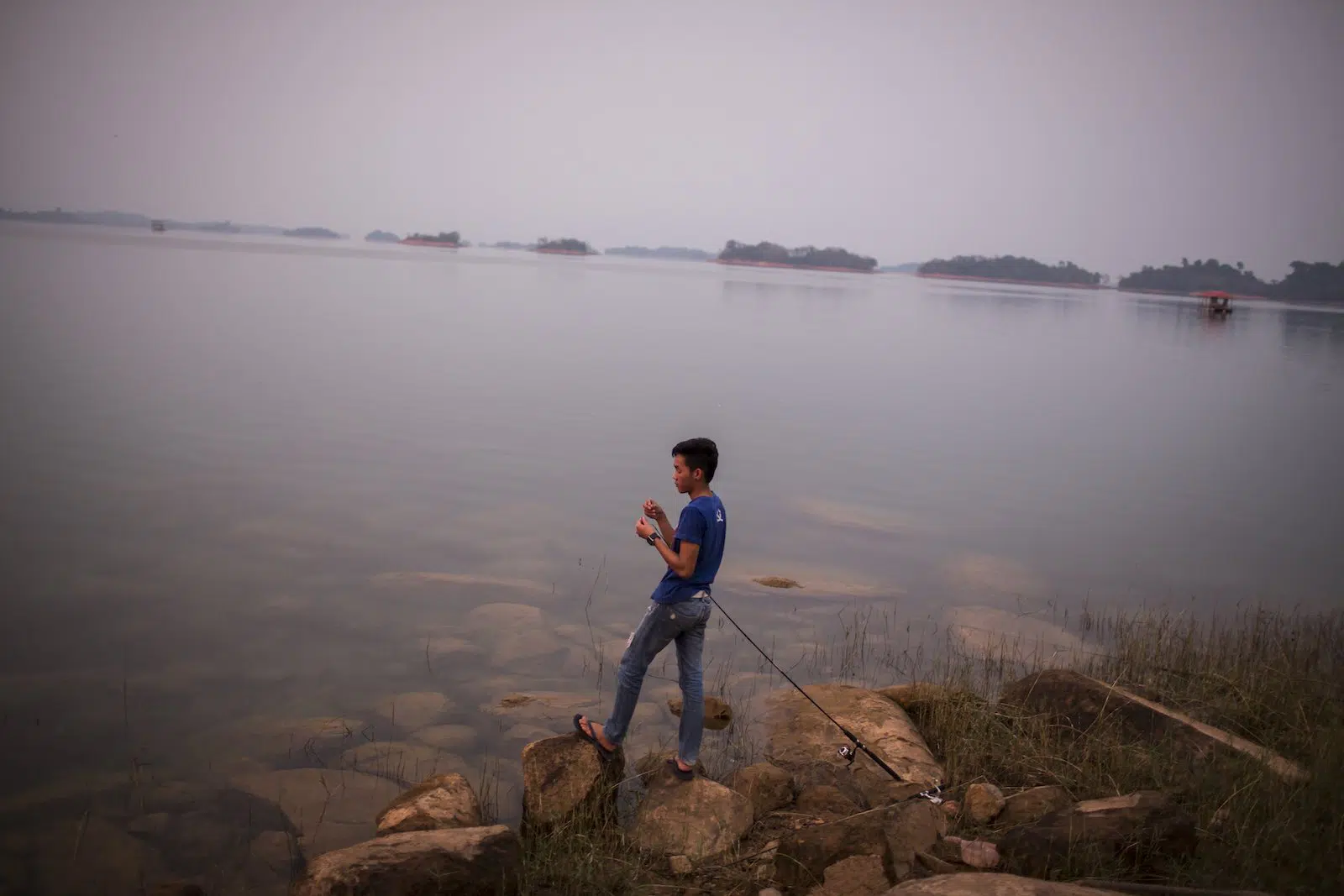
Revitalizing wetland habitats
With more than a third of economic growth in Laos relying on the country’s natural resources amidst its rapid growth, increased pressure has been placed on the environment. We supported three villages in the Xe Bang Fai district and Khammouane province to help develop sustainable and economically viable wetland management plans. Our support resulted in a regeneration of crucial wetland habitats and aquatic species. One of the supported villages supported was able to use wetland resources to earn money and support small-scale riverbank erosion protection measures.
NEWS FROM LAOS
-
 Call For Applications – 2024 YSEALI Regional Workshop: Sustainable and Inclusive Cultural Tourism
Jakarta
April 2, 2024
News

-
 Laos
Laos
February 22, 2024
Publication
-
Team Leader, Laos Australia Connectivity Partnership
Deadline: May 10, 2024
Career
Ensuring access to justice
Access to justice for all citizens of remains a priority for our work in Laos. In order to increase Laos citizens access to justice, the Foundation’s Legal Aid Program provided support to the Lao Ministry of Justice and the Lao Bar Association to establish and operate 94 legal aid offices and eight legal aid clinics throughout the country. This program facilitates essential legal aid services such as documentation and court representation.
The Latest Across Asia
News
April 25, 2024

Program Snapshot
April 18, 2024
News
April 17, 2024

2024 Lotus Leadership Awards
The Lotus Leadership Awards recognize contributions towards gender equality in Asia and the Pacific