
InAsia
Insights and Analysis
Notes from the Field: Luce Scholar Interrupted
May 27, 2020
On Friday, March 20, 269 days after setting off for Beijing as a member of the 2019–20 class of Luce Scholars, I arrived safely home in Atlanta, Georgia. Just 24 hours earlier, my cohort and I, scattered over nine countries in Asia, had been strongly advised to return to the U.S. ahead of a Level 4 global travel advisory, the highest warning that can be issued by the State Department. Having evacuated my initial placement in Shanghai in late January due to imminent lockdowns in the city, I was self-isolating in Indonesia at the time, already feeling disconcerted by a 6.6 magnitude earthquake the night before. While the sudden departure left questions unanswered, friendships cut short, and opportunities forfeited, during my long journey home I had the opportunity to reflect on the past year and the beautiful narrative that had begun to unfold in an unpredictable time.
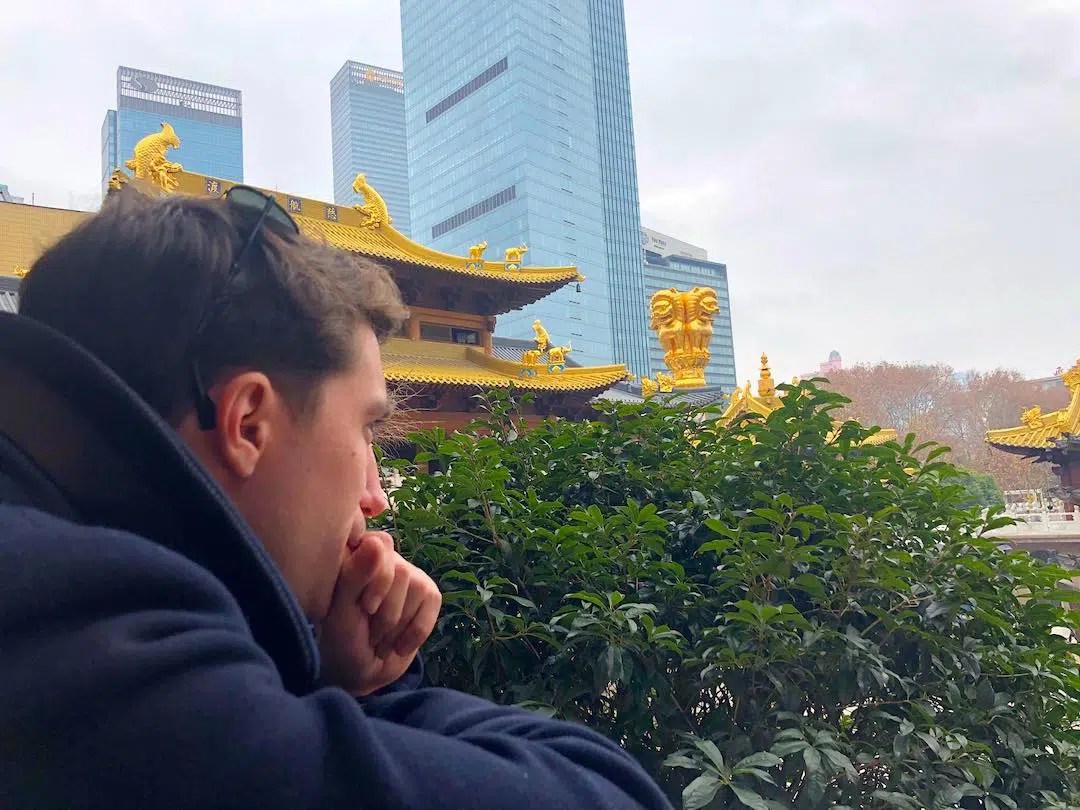
Luce Scholar Davis Butner (Photo: Davis Butner)
Just two months earlier I was living in Shanghai, China, marveling at the pageant of contrasting vignettes that played out around me every morning during my commute to work on an electric scooter. The city, a pixelated urban plan of fluctuating scales, densities, and intentions, seemed to condense into a boiling hotpot of overlapping daily routines and paradoxical interactions: a woman washing vegetables next to a Starbucks Reserve, a child walking out of a partially demolished neighborhood surrounded by a barren construction site on the way to school, a line forming before the window of a small, cash-only dumpling shop while bustling commuters scanned their fingerprints to enter an adjacent skyscraper.
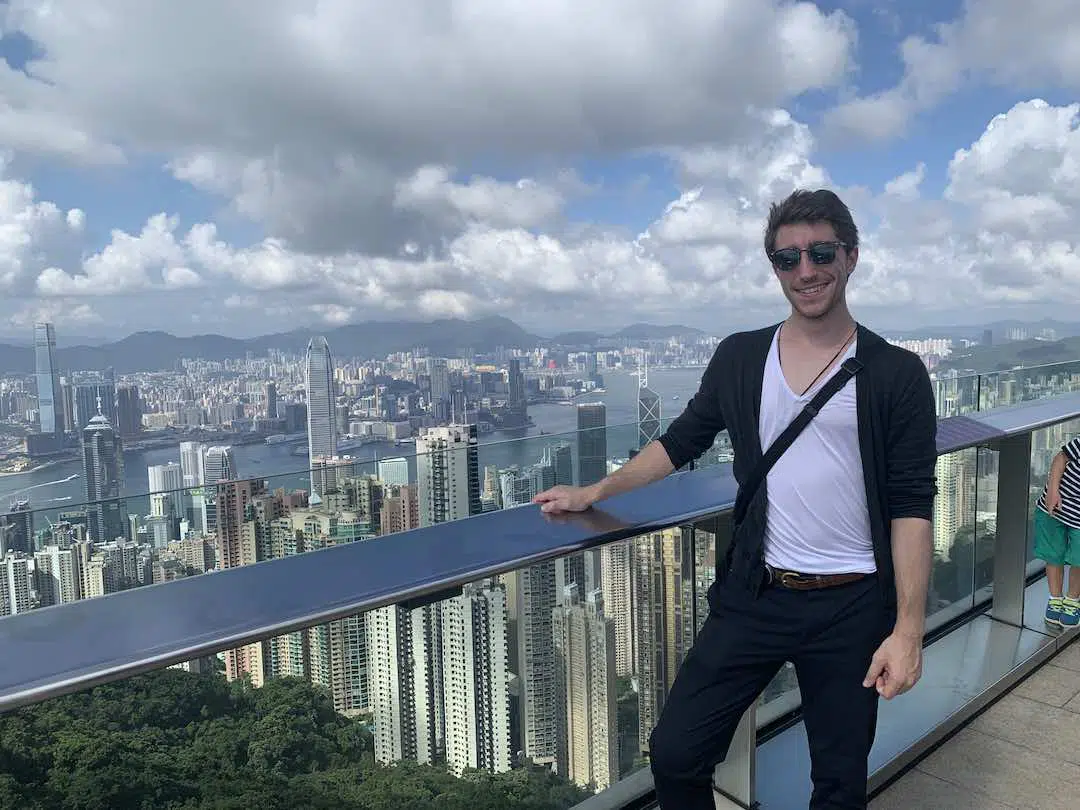
Hong Kong (Photo: Davis Butner)
Sitting in an empty conference room on my first day at the architectural firm of Neri&Hu, I gazed through a window framing an adjacent residential neighborhood, watching residents busy themselves with chores and conversations. The firm’s office had recently moved, now occupying a repurposed warehouse in the central Jing’an business district of Shanghai. In just the past six months, the building’s floors had been recast, its doors and interior finishes installed, and the driveway twice repaved, even as two new buildings sprang up next door. The only thing that seemed constant was change. Working for an architectural firm that capitalizes on the concept of “reflective nostalgia,” a longing for remembrance of the past in reconstructing the present, I found myself thinking a lot about memory and how it illuminates our daily lives and surroundings.
Age clashes with ambition in this city. Currently the world’s most populous urban area, Shanghai is a visceral and physical manifestation of China’s unprecedented economic development. Yet the state of infrastructure within the nation’s tier-one metropolis tells of a culture of ancient and deep-seated tradition grappling with the social pressures of rapid urban expansion. The city’s buildings, in their dynamic states of construction, renovation, and demolition, symbolize the paradox of massive growth and sociocultural preservation at a time of rapid renewal.
In Shanghai, I lived in a landmark residential neighborhood dating back to 1912, on the third floor of a weathered lane house in Xuhui, the former French Concession district. My apartment window looked directly into the chic, warmly lit courtyard of an adjacent wellness center, formerly an historic health clinic that I would eventually learn had been renovated by the very firm I had come to work for during my year as a Luce Scholar. Intended as a community center for the surrounding neighborhood, the complex now boasts an array of wellness initiatives, training programs, a Michelin star restaurant, and pricey, hour-long yoga classes. Yet, I never saw anyone from my neighborhood walk through the stained oak entrance.
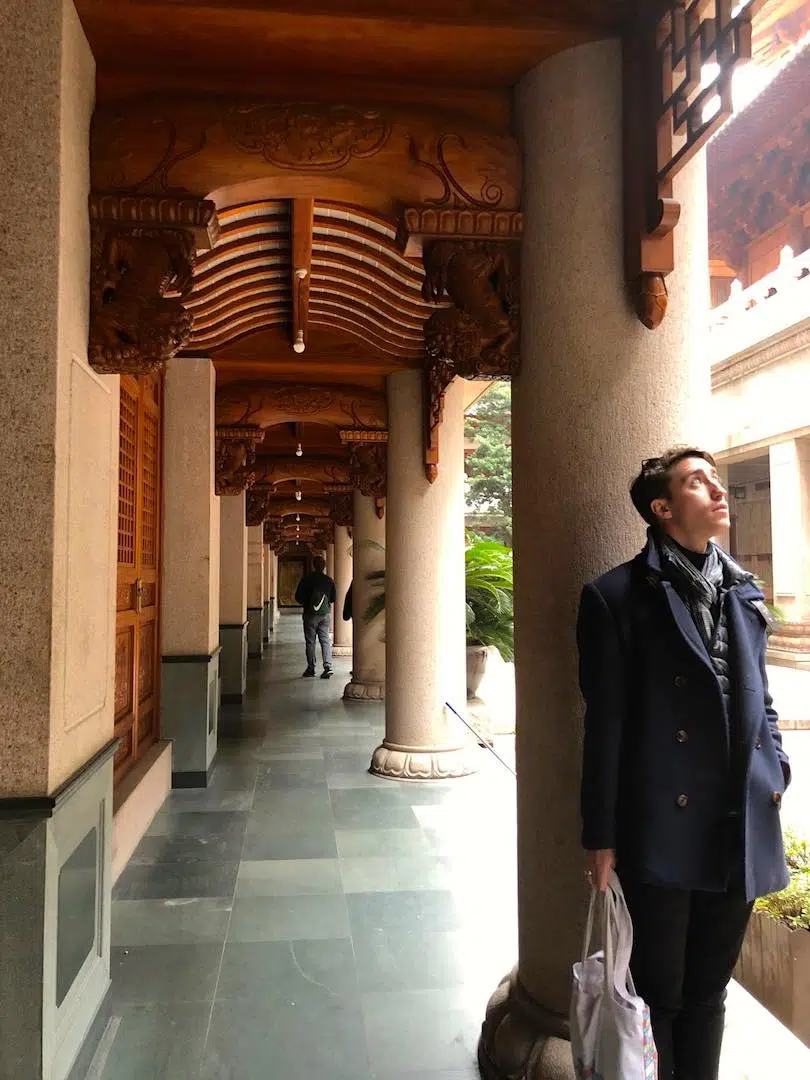
(Photo: Davis Butner)
On a drizzling Saturday morning in September after a severe typhoon, I joined my neighbors who were watching the local authorities cut down an old oak tree that had fallen in front of the entrances to our neighborhood and the adjacent center. One neighbor leaned over and whispered in a Shanghai dialect that his mother had planted that tree over 60 years ago when he was a child. He let out a deep sigh as we watched the tree’s trunk hoisted out of the ground and into a waiting dump truck. I can only imagine the change this man has witnessed in his lifetime, and the emotion he must have felt to see yet another relic of family memory violently torn away.
On the morning of January 28, having lingered in the office over Chinese New Year to submit my final deliverables for an international design competition, I made the difficult decision to leave Shanghai as reports began to warn of an imminent lockdown. The next day, the United States would evacuate the Shanghai consulate. Leaving behind my belongings, with just a one-way ticket to Kuala Lumpur and a duffle bag with the means to work remotely, I set off on an unknown journey hoping to return to Shanghai with new insights from the perspective of the designers and architects I hoped to encounter.
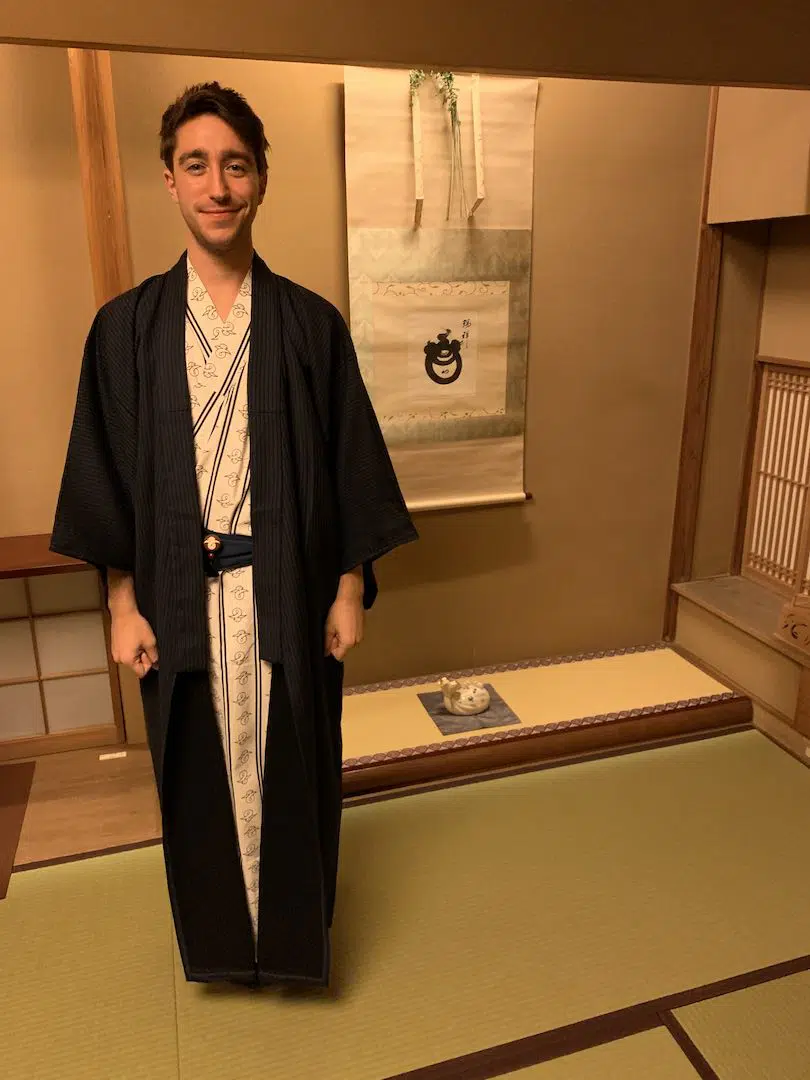
Kyoto (Photo: Davis Butner)
In Malaysia, I met with preservationists in Penang, hotel managers and tenants in Kuala Lumpur, and developers in Genting. In Japan, I worked for room and board for the leaders of Airbnb China at their renovated pension in Hakuba, greeting guests, making beds, drawing floor plans, cleaning bathrooms, and practicing Mandarin with the staff. In Osaka, Naoshima, and Kyoto I found buildings by Tadao Ando, Sou Fujimoto, Kengo Kuma, and Frank Lloyd Wright, interviewing the fourth-generation owners of a humble ryokan that had housed guests for over a century. And in Indonesia I began to meet with leaders in eco-hospitality, connecting with educators at the Green School, designers of the island of Bali’s fantastical bamboo Green Village, by Ibuku Architects, and touring Potato Head Studios, a hotel designed by the Dutch firm OMA featuring recycled materials and handcrafted textures reflecting Balinese arts and crafts traditions.
During my time in Japan, the country was added to China’s growing list of “epidemic regions,” which would make reentry into Shanghai unlikely and increasingly uncertain. I quickly worked to renew my passport in Osaka before traveling to Indonesia, one place I knew I could safely enter to spend a precautionary two weeks before attempting to return to China. Just two days after arriving, Indonesia halted visa renewals for all foreigners and began to lock down to quell the spread of the virus. On my sixth day, I was asked to return home by the Luce and Asia Foundations. Two days later, flights off the island were suspended.
On what would turn out to be my last night in Asia, I sat down with Pauline O’Brien, head of the Green School’s KemBali recycling program, as we recalled the circumstances that brought us to this moment in the jungle of Bali. After a day touring the bamboo architecture and circular economic initiatives of the Green School, she handed me a glass of homegrown dragonfruit kefir and, noticing my mounting anxiety before the journey home, calmly offered some words of advice: “The world needs a little ‘nappy’ right now… So stop worrying about the future, trust the instincts that brought you safely here, and use them to create your own reality.”
Davis S. Butner was a 2019–20 Luce Scholar, a program administered by The Asia Foundation. He can be reached at [email protected]. The views and opinions expressed here are those of the author, not those of The Asia Foundation.
About our blog, InAsia
InAsia is posted and distributed every other Wednesday evening, Pacific Time. If you have any questions, please send an email to [email protected].
Contact
For questions about InAsia, or for our cross-post and re-use policy, please send an email to [email protected].The Asia Foundation
465 California St., 9th Floor
San Francisco, CA 94104
The Latest Across Asia
News
April 25, 2024


Program Snapshot
April 18, 2024
News
April 17, 2024
2024 Lotus Leadership Awards
Thursday, April 25, 2024, New York City
The Lotus Leadership Awards recognize contributions towards gender equality in Asia and the Pacific
0 Comments