From Stories to Solutions: Improving Mental Health in the Maldives
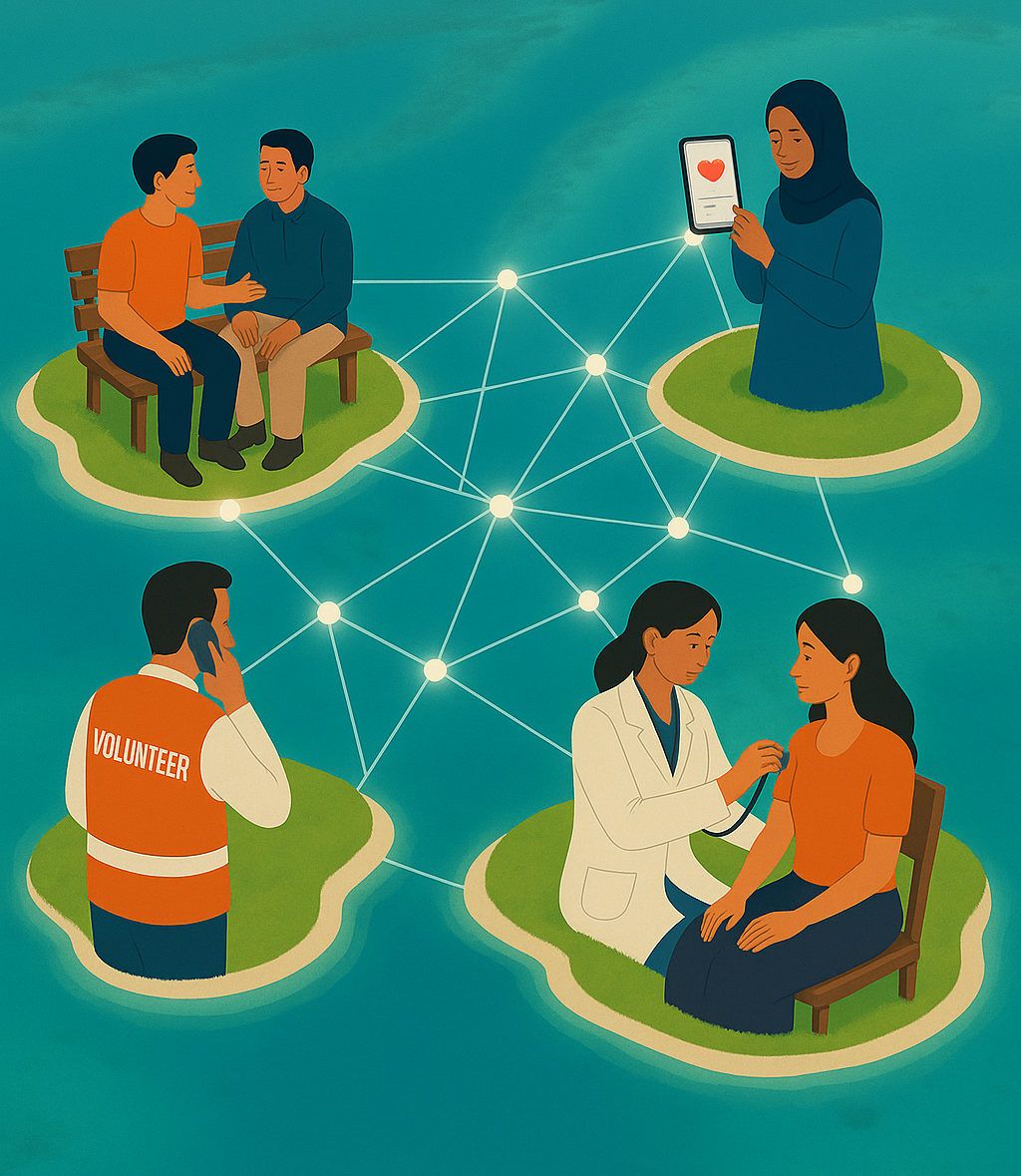
The Maldives is renowned for its natural beauty and vibrant tourism industry. Like many nations, it is struggling to meet the mental health needs of its communities. The stories captured during a first-of-its-kind mapping study of the mental health system in the Maldives highlight why change is urgently needed, why solutions must address both service users and providers, and what potential pathways for destigmatized, culturally sensitive care could look like in the Maldives.
A Mother’s Desperate Journey
During tourism season, Aishath prepares meals and cleans rooms at a guesthouse in the southern Maldives. But at home, she was watching her teenage son disappear before her eyes. Once an engaged, social boy, her son had withdrawn. Depression had taken hold, along with self-harm and an unhealthy dependence on his phone. He stopped studying and stopped talking to friends.
Desperate for help, Aishath took him to the nearest private clinic despite the financial strain. But when she arrived and saw that the translator working with the foreign therapist was someone her family knew, panic set in. In a small island community, gossip spreads quickly. The fear of her son being labeled as “crazy” or her family being criticized was too much to bear. She left without seeing the therapist.
Her son’s condition worsened, so she made the difficult decision to borrow money and travel to the capital, Malé, for proper treatment. What followed was a nightmare of cancelled appointments, hours-long delays, and expenses exceeding MVR 50,000—more than USD 3,200—in just 20 days, a fortune for a guesthouse worker.
“I just couldn’t continue,” she said. “I knew stopping meant my son would lose the care he needed, but I felt completely trapped.” Making matters worse, her husband dismissed her efforts, saying: “What will people say if they find out? Haven’t you already wasted enough money?”
When the Helper Needs Help
The stress of watching her son suffer and navigating an impossible healthcare system took its toll on Aishath. She developed severe headaches and back pain. When she finally sought help at the local health center, the doctor’s response was dismissive: “Fikurukuranee?” (“Are you overthinking?”) She smiled and shook her head, as expected, but left wanting to cry.
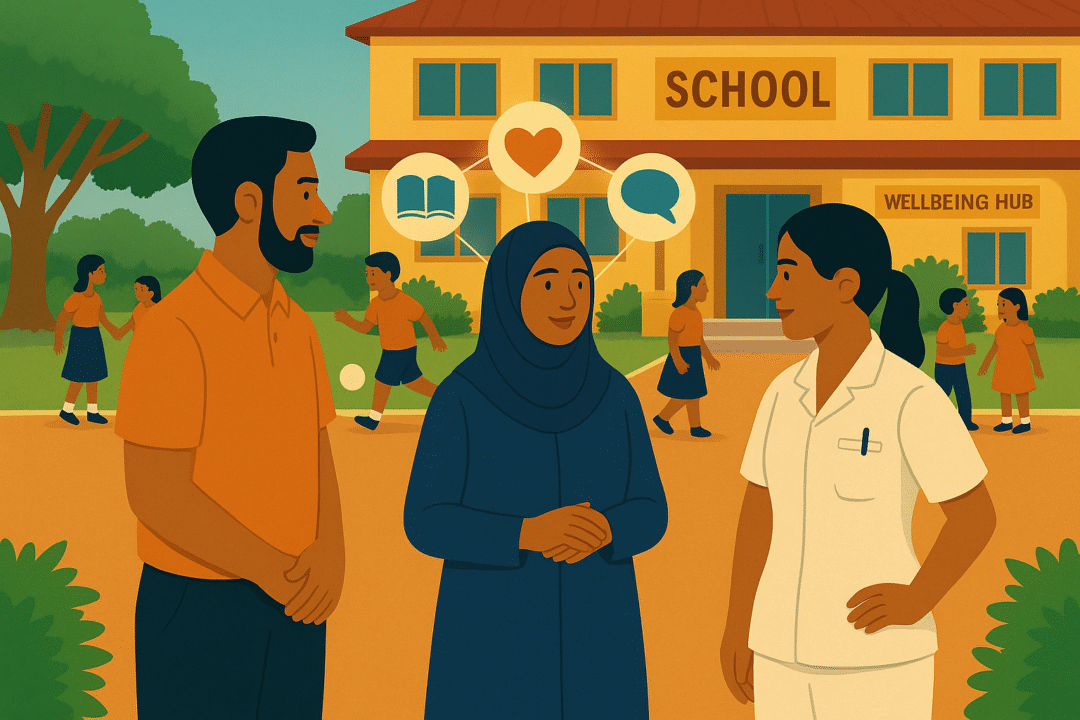
A nurse noticed her distress and gently suggested she join a parenting support group at the community center. That suggestion became a lifeline.
In the group, surrounded by other mothers, Aishath found something she hadn’t expected: safety without judgment. Here, women spoke openly about struggles that usually carry too much shame—divorce, family problems, and children’s difficulties. No one asked if her son was “the mad one.” Instead, she found community, understanding, and hope.
Taking the Time to Talk
Aishath’s story is one of many we heard during the mapping study, which will be released in full in November. We partnered with a team of psychologists, developmental practitioners, and psychosocial support practitioners from Sri Lanka and the Maldives to understand the needs, resources, and barriers to care in the island nation. Our core partner was the Maldivian Nurses’ Association, whose leadership and networks ensured local ownership, access, and trust throughout the study. The National Health Research Council granted ethical approval.
We captured perspectives from specialized and non-specialized service providers, humanitarian workers, and community leaders. We also spoke with caregivers, service users, migrants, people living with disabilities, women, men, youth, and older adults. In total, 17 service providers and 109 individuals shared their perspectives.
What we found was both troubling and hopeful. Like many nations, the Maldives has limited services, high costs, persistent stigma, and fragmented care systems. However, the island nation’s unique geography and small population create distinct challenges and opportunities. The impact extends far beyond individual suffering. Untreated mental health conditions strain healthcare budgets, reduce workforce participation, and slow national development. For a country dependent on tourism and fishing, with a population scattered across nearly 200 inhabited islands, these effects are magnified.
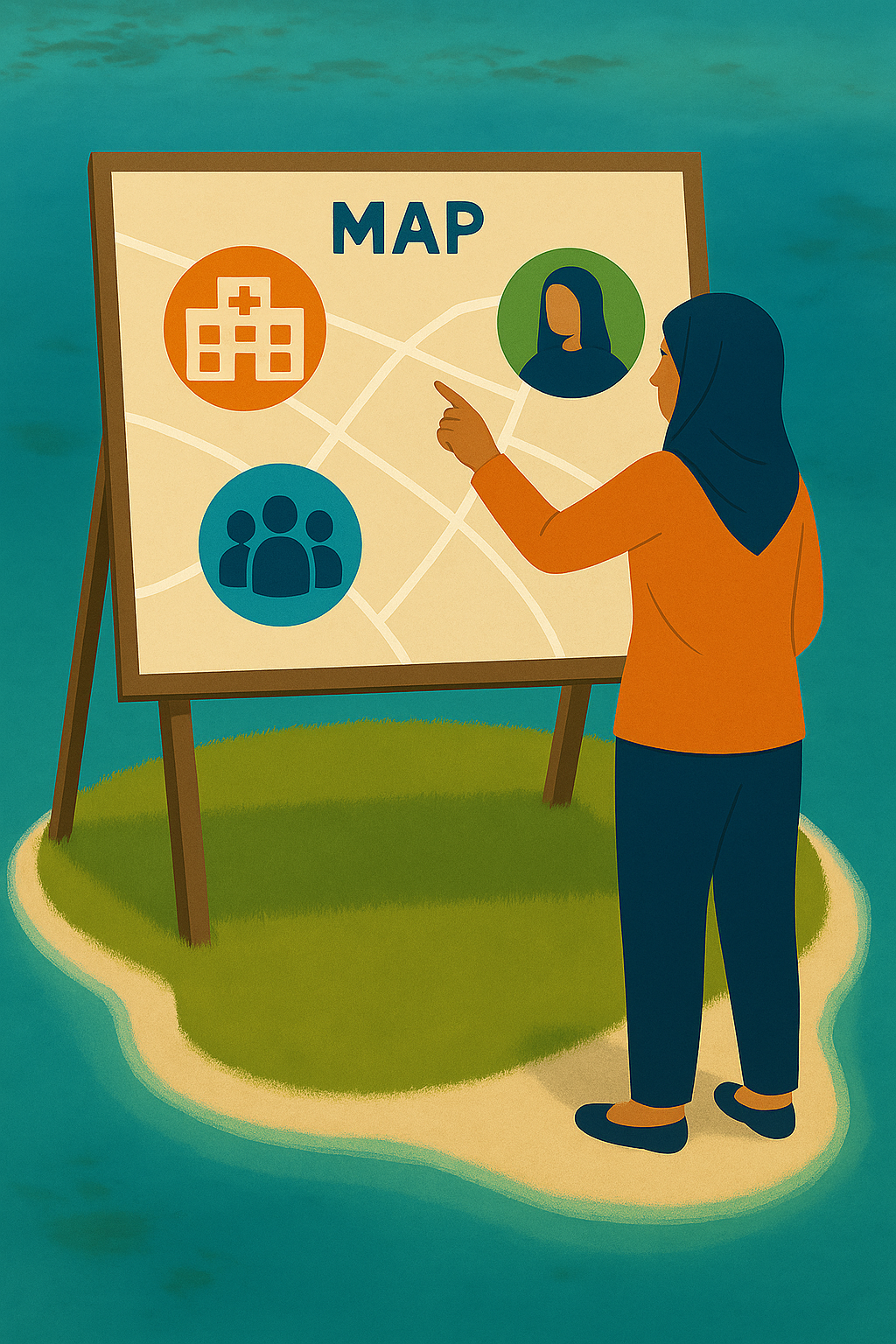
A Therapist’s Dilemma
In Malé, psychologist Dr Mariyam said she begins her typical day at 6 a.m. with hours of preparation before 10 appointments—a case load that will keep her working late.
On one particular day, her first client is a child needing a developmental assessment. However, many validated diagnostic tools don’t exist in the local language, Dhivehi, so she must improvise. The child’s mother, a single parent, has borrowed money to afford the visit. Mariyam feels the weight of wanting to deliver her best under difficult circumstances.
Her second client has self-diagnosed after seeing symptoms on social media, a growing trend that makes treatment more complicated. Despite her training, Mariyam finds psychoeducation one of her hardest tasks. Western diagnostic labels often don’t translate meaningfully into Dhivehi, creating gaps in understanding between her and her clients.
Another session is with a young man who is angry about being forced to see a counsellor. He insists nothing is wrong and prefers seeking guidance from his spiritual leader. He fears being judged as having weak faith and worries the community might ostracize him for seeking psychological help. Mariyam finds herself caught between professional duty and the cultural stigma her client faces.
The day’s final session is with a boy but is dominated by his parents, who insist that Mariyam tell their son that nothing is wrong with him. They say he should study nine hours daily and obey them. Despite her best efforts to focus on the child’s needs, it feels like an uphill battle against family dynamics and expectations.
After all the sessions are complete, Mariyam finally heads home. She then sits down to finish all her documentation and create the assessment reports. By the time she is done, her two children are asleep, and she’s missed another evening with them.
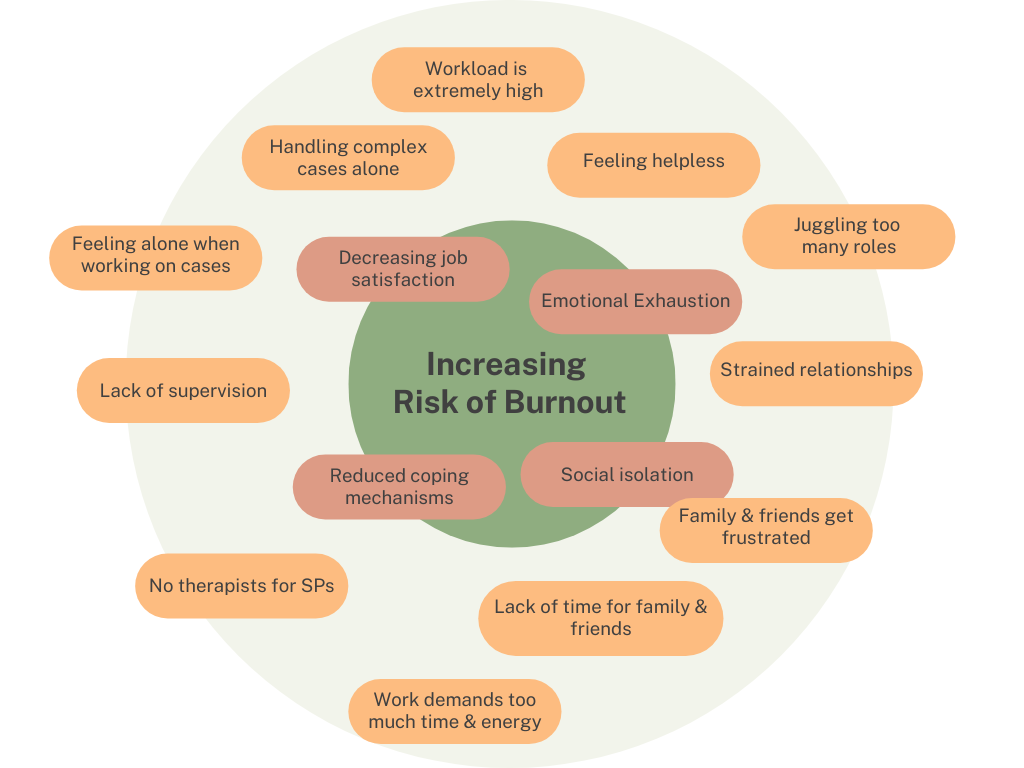
With 60 open cases and no specialists available for complex referrals, Mariyam feels stretched to her breaking point. Her colleagues are too overworked to provide mutual support. She dreams of clearer regulations, better professional support, and a stronger community for providers like herself.
Finding Hope in Community
These stories aren’t isolated incidents. They represent a system-wide crisis.
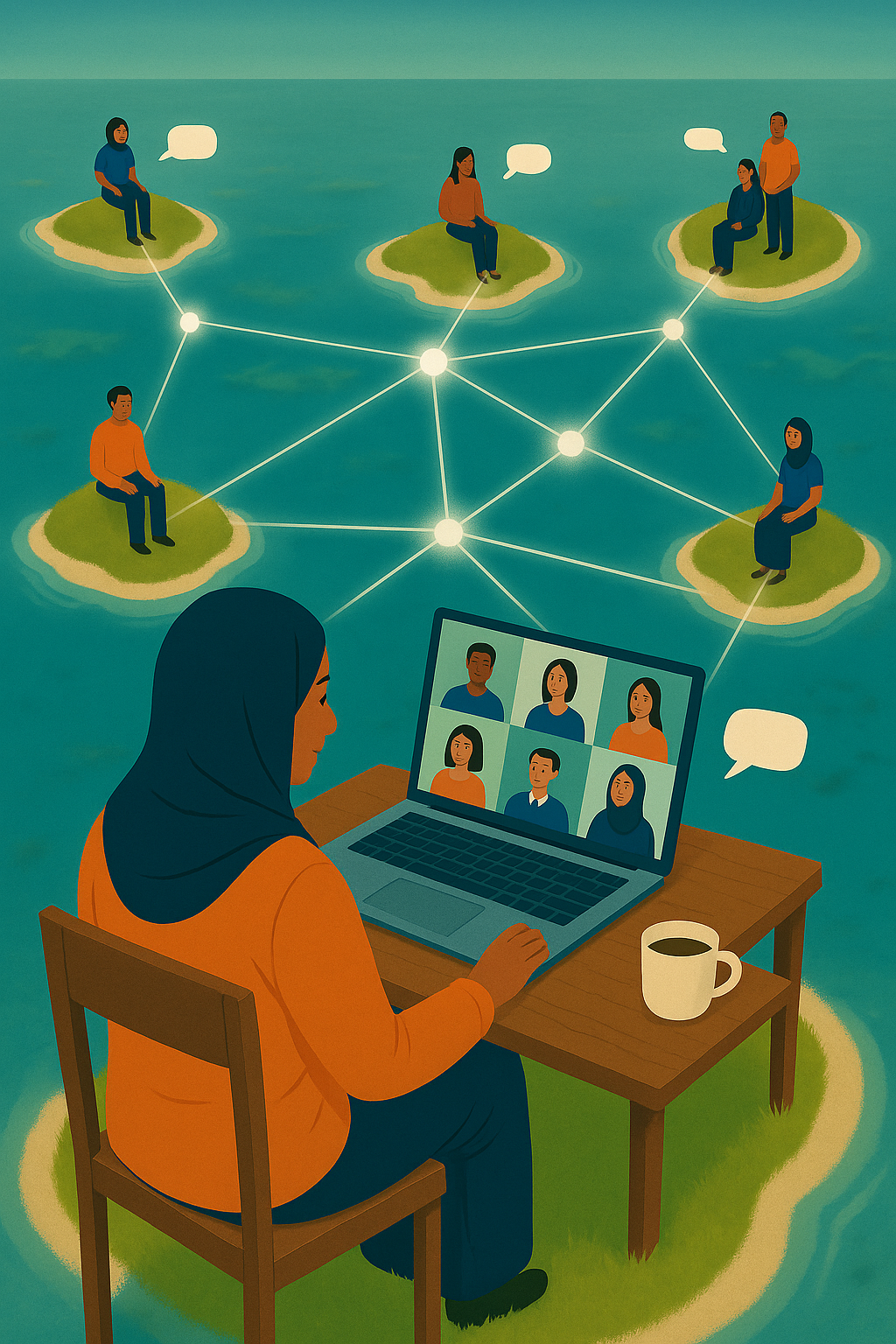
Yet within these challenges lie the seeds of a solution. Aishath’s experience with the parenting support group points toward a different model of care, one rooted in community support rather than clinical settings alone. This aligns with what mental health experts have long advocated: community-based approaches that make support accessible, culturally appropriate, and less threatening than traditional medical models. For island communities where everyone knows everyone, this approach isn’t just preferable, it’s essential.
The study revealed significant untapped potential within existing community structures. A key direction is equipping whole communities with the skills to support themselves and each other, reserving specialized care for when it is most needed. When properly equipped, primary care workers and other non-specialized providers are well placed to offer emotional support and early interventions.
Mariyam’s experience illustrates the dedication of healthcare providers while highlighting opportunities for enhanced support. Healthcare professionals would benefit from additional tools for engaging families in therapy, delivering culturally relevant psychoeducation, and integrating traditional and spiritual approaches as complementary resources rather than competing alternatives.
The research identified four strategic priorities that can strengthen mental health support across the islands:
- Enhance Accessibility: Improve pathways to specialized care by adopting recovery-oriented practices and implementing solutions for practical issues for caregivers and service users
- Support Healthcare Providers: Invest in professional development opportunities that help providers like Mariyam deliver culturally responsive care while maintaining sustainable workloads and professional well-being.
- Strengthen Community-Level Support Systems: Build on successful models like Aishath’s support group by expanding community-based mental health resources that integrate with existing social structures, community leadership, and primary care services.
- Develop Integrated Approaches: Reframe mental health literacy, awareness, treatment, and support to align cultural sensitivities, tiered access to support, and build resilience. These approaches are intentionally co-owned and can be implemented collaboratively across different sectors at different levels by individuals, schools, community-based organizations, and state and nonstate actors working together. The Maldives’ close-knit communities and strong social bonds provide an excellent foundation for this integrated, culturally grounded approach to mental health support.
The Moment for Change
The researchers found something encouraging—readiness for change. Families are actively seeking support, providers are calling for system improvements, and communities are willing to engage. The question isn’t whether action is needed; it’s how quickly and boldly the Maldives can act.
The country’s small population, often seen as a limitation, creates a unique opportunity. System-wide progress isn’t just aspirational, it’s achievable. Every person reached, every community engaged, every provider supported makes a meaningful difference in a nation of fewer than half a million people.
Aishath’s son is still struggling, but she’s no longer facing it alone. The support group continues to meet, and slowly, other services are becoming available. Miriam still works long hours, but advocacy efforts are pushing for better working conditions and support systems.
The stories remind us that behind every statistic about mental health is a human being seeking connection, understanding, and hope. In the Maldives, as elsewhere, the path to better mental health care runs through the community, where healing happens not in isolation, but in the spaces where people feel seen, heard, and valued.
Media Contact
Our development experts and staff in Asia, the Pacific, and the United States are available for media briefings and speaking engagements.
For assistance, please contact Strategic Communications:
Eelynn Sim, Director
[email protected]