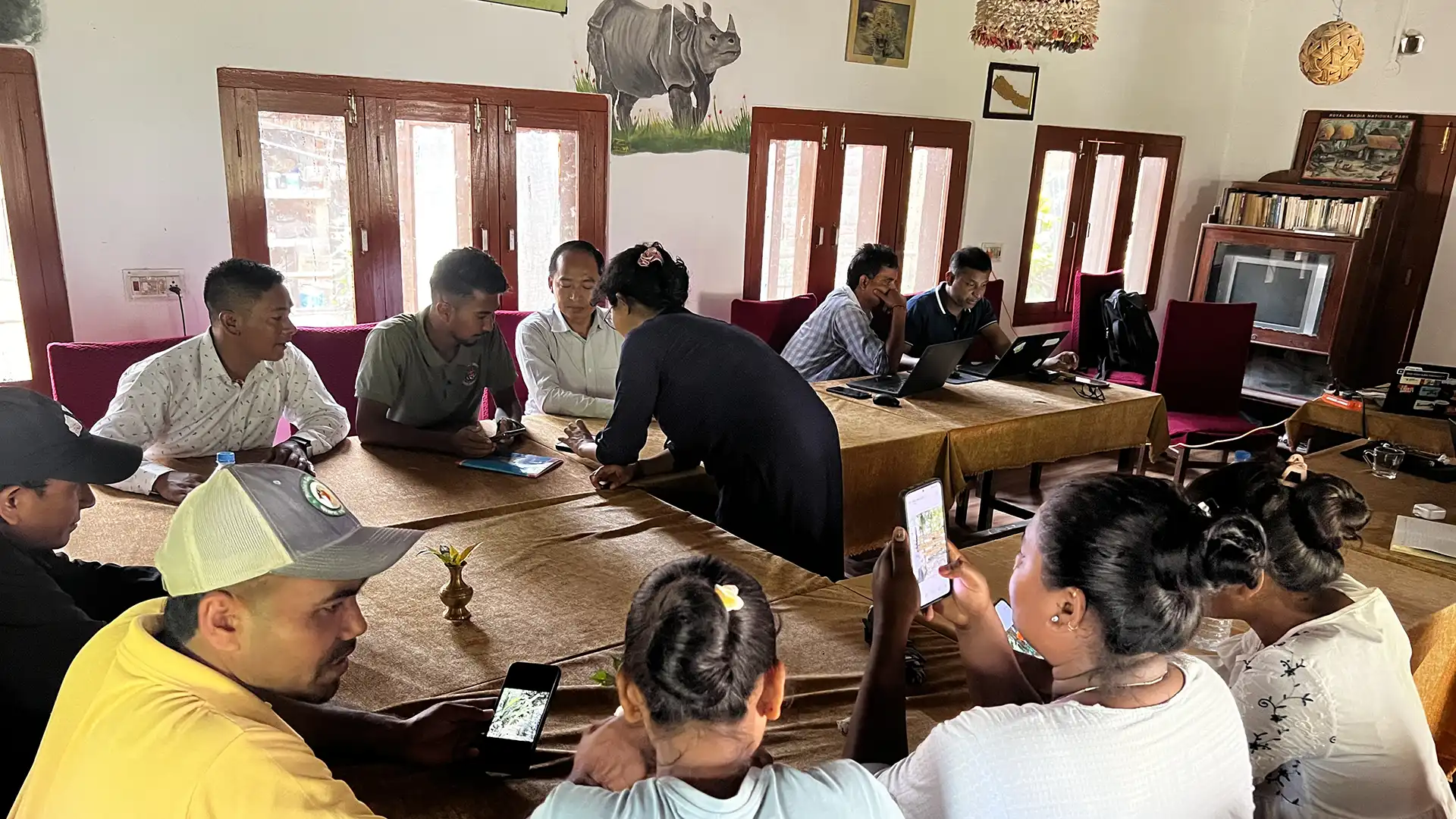
Pilot Program Shows Pacific Islands Are Open for Digital Business
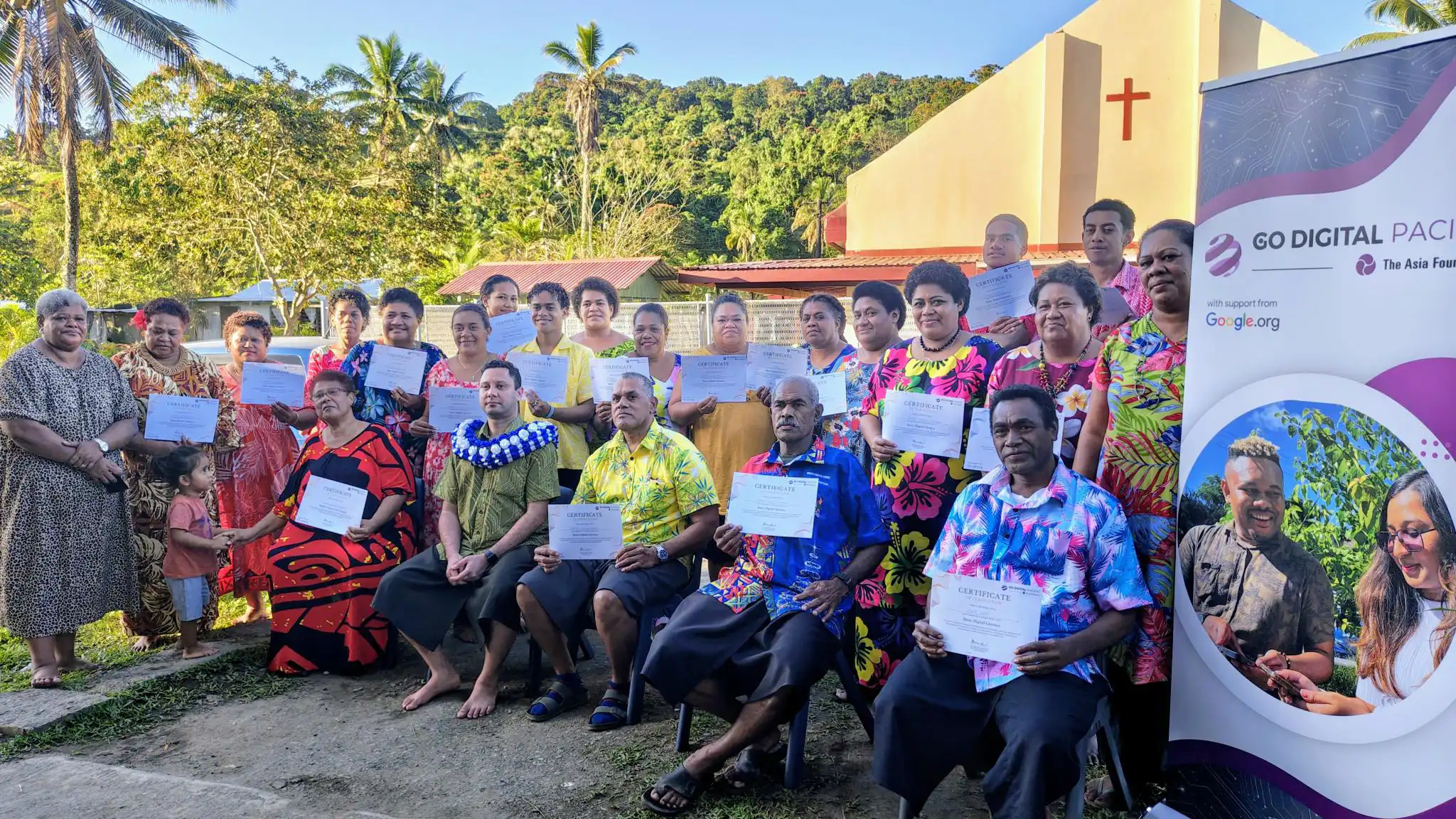
Across Fiji and Vanuatu, many women, job seekers, and small business owners remain excluded from the digital tools increasingly needed to find work, grow income, and participate safely in the online economy. For people in rural, peri-urban, and outer-island communities, limited digital confidence can mean missed job opportunities, weaker business visibility, and fewer ways to manage finances or reach customers.
From January 2024 through December 2025, The Asia Foundation ran Go Digital Pacific, a pilot program in the two island nations (see also: Digital Scoping and Mapping of Fiji and Vanuatu) to provide digital and financial literacy skills. Funded by Google.org, the program equipped women, young people, micro-entrepreneurs, and rural communities with practical digital tools and the confidence to use them safely and productively for their livelihoods.
An independent impact assessment conducted in March–April 2026 found that participants gained skills and confidence they are already putting to use in their existing businesses, launching new ones, or applying for jobs that were not previously in their reach.
|
Digital Skills
95.5% gained AI confidence |
From drafting reports to navigating job applications—AI tools were the most adopted skill (34%). Confidence gains spread to families, church groups, and colleagues. |
|
Employability
24% took employment action |
Participants secured jobs via AI-assisted CVs and interview prep. Employment action was the #1 outcome in Vanuatu (38%). 97.5% reported improved livelihood prospects. |
|
Business Growth
30% promoted online |
Entrepreneurs built online presence using Canva, Google Business Profile, and social media. One sewing entrepreneur landed clients including Digicel, UN Women, and the Ministry of Education. |
|
Financial Behavior
34% started tracking finances |
Many tracked income and expenses digitally for the first time. In Vanuatu, participants also adopted M-Vatu and digital wallets to receive payments. |
|
Digital Confidence
96% confident using digital tools |
Confidence was the gateway to all other outcomes. 99.5% would recommend the training. Not a single respondent strongly disagreed with any of the 11 outcome indicators. |
“The training helped me find a job after two weeks of attending the GDP training. It was really helpful. With the skills I learned, I can contribute to my new role,” said one program participant in her survey response.
According to other testimonials gathered in the survey, a caregiver used AI to help secure her new job and now writes personalized songs for a patient with dementia. A woman in Vanuatu used AI to help her update her CV, and she is now a secretary at a law firm.
The results show that Go Digital Pacific achieved more than teaching digital skills—it is strengthening employability, entrepreneurship, and inclusion in places where access to opportunity is often uneven. The pilot helped participants translate basic digital literacy into practical gains: better job readiness, safer online engagement, stronger business promotion, and more disciplined money management. Just as important, many participants are sharing these skills with youth groups, church members, and other entrepreneurs, extending the program’s reach beyond the classroom and building local momentum for digital inclusion.
Respondents were also clear: they want more. Participants said they want advanced training, business management support, coaching, and better access to connectivity, devices, and finance so they can keep building on their gains. The program has demonstrated that community-led digital skilling works in the Pacific. With continued investment, it is ready to scale.
2,260
participants trained
80%
women
126%
of target reached
71%
completion rate
All 11 outcome indicators: % agree or strongly agree (n = 205)
Related Publication:
Media Contact
Our development experts and staff in Asia, the Pacific, and the United States are available for media briefings and speaking engagements.
For assistance, please contact Strategic Communications:
Eelynn Sim, Director
[email protected]