
Going Mobile: The Philippines Is Moving to Make Infrastructure More Accessible

Photo by Patrick Roque
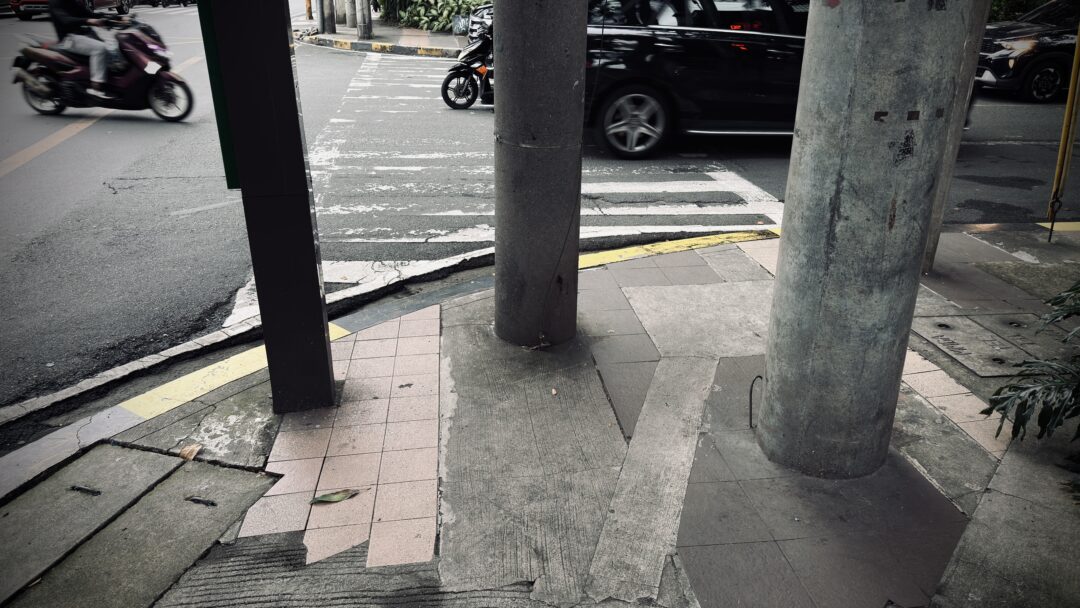
It’s referred to as Mt. Kamuning, and it’s a “mountain” no one wants to climb. The roughly five-story footbridge over the railway and highway in Quezon City can be imposing for even the most fit Filipino, but its flights of stairs are simply insurmountable for many with disabilities.
The footbridge, which fortunately is slated for replacement, is one of the countless barriers to mobility—and full participation in society—for those living with disabilities in Manila. A steep curb with no ramp, a lack of audible signals, a wide train platform gap, or a bus without handrails can turn the simplest commute into a test of endurance or a struggle for survival.
“Commuting here in Manila? Just thinking about it makes my stomach twist into knots,” commuter and inclusion and accessibility advocate Maureen Mata said at a mobility summit in Manila. “You really have to be prepared. Because of my disability, I need to plan how to get to places—especially when I don’t even have enough for fare. Every commute feels like gearing up for war.”
In a country that prides itself on warmth and hospitality, the built environment and lack of accessible and inclusive services in the Philippines too often leave some people behind. For example, a 2023 accessibility walkthrough by news outlet Rappler found that almost 80 percent of train stations in Metro Manila are not fully accessible to persons with disabilities.
This is despite the fact that the Philippines has some of the most progressive policies on accessibility and inclusion in the region. What has been missing is implementation, along with the meaningful participation of those most affected in shaping solutions.
One way to increase that participation is to create more opportunities for dialogue and engagement between those designing and building infrastructure and those who use it, especially those who walk, ride bicycles, or need some form of accommodation to move about the city.
Bringing more voices into the conversation around accessible transport
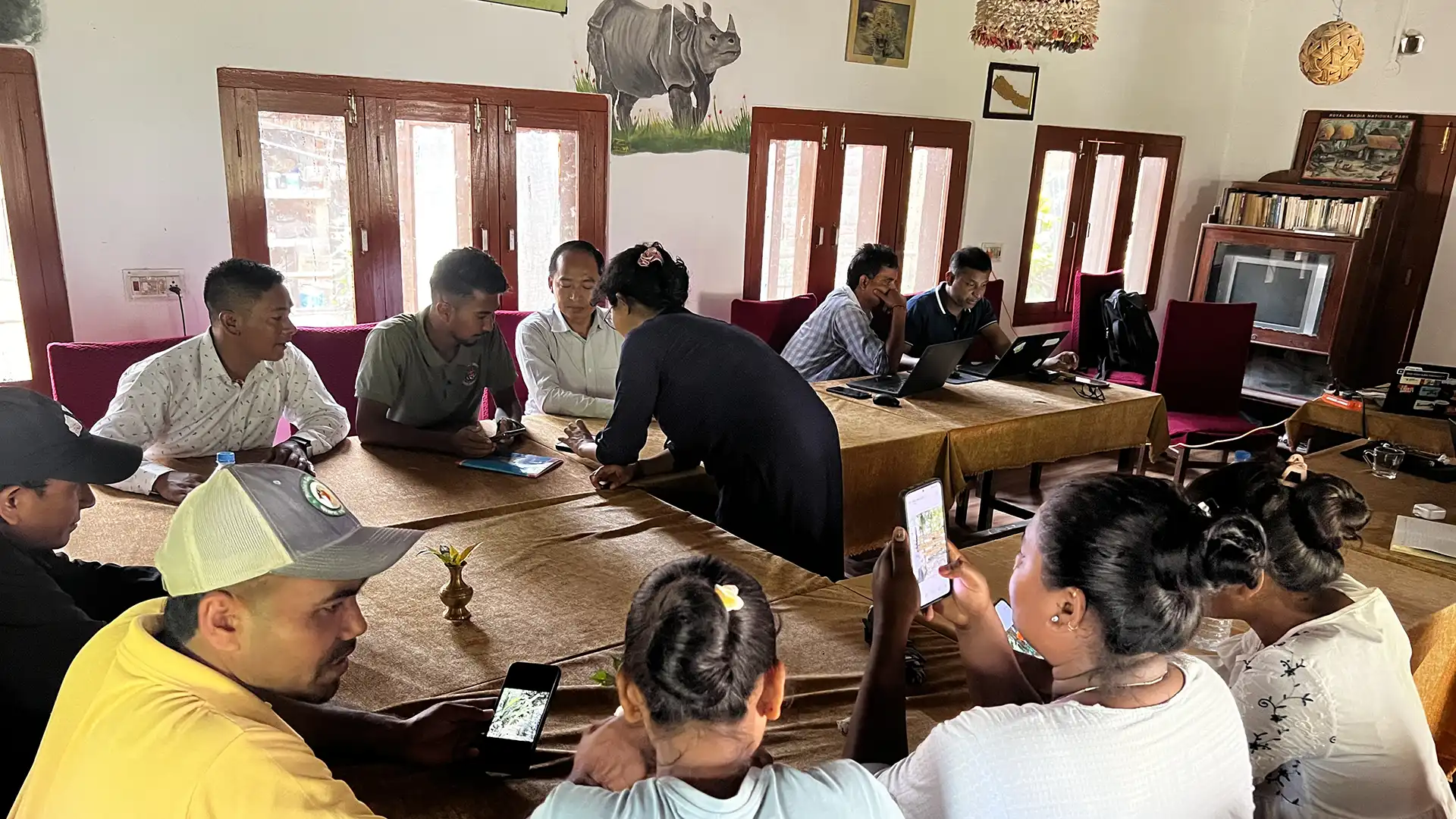
In September, The Asia Foundation co-sponsored the 2025 Philippine Mobility Summit with AltMobility Ph—a transport reform organization committed to making transport in the Philippines sustainable and inclusive. Many other organizations joined in convening and sponsoring the summit, a sign of how widespread the support for improved mobility is in 2025.
The summit gathered commuters, mobility advocates, government officials, and private sector representatives to imagine what a truly inclusive, accessible, and reliable public transportation system could look like in a city known for oppressive traffic.
“As a pedestrian and bike commuter, I see both the human cost and the missed opportunity: lives lost in crashes, hours wasted in traffic, and health compromised by the elements,” Myta Santiago, a summit participant who walks and bikes in the city, said.
“The state of mobility in the Philippines is not simply a technical issue of traffic management,” Santiago continued. “It is a question of dignity, safety, and who gets to claim space in our roads, rails, air, and water. I, for one, am happy that the Philippine Mobility Summit has created space to confront these hard truths and imagine a future where streets and systems finally put people first.”
Over the course of the event, participants developed and presented a set of recommendations. These included:
- Strengthening institutional and governance frameworks toward improving mobility and transport planning and management through stronger institutions.
- Establishing clearer policies and more open collaboration.
- Making roads safer through inclusive street design and environmentally resilient infrastructure—especially prioritizing the needs of the most vulnerable: children, older adults, persons with disabilities, pedestrians, and cyclists.
- Enhancing the transport system by investing in, improving, and expanding public transport options and ensuring complementarity and connectivity across all transport modalities.
Representatives from the Department of Transportation—or DOTr—were receptive to the recommendations.
“What we have built here is a foundation for a long-term collaboration, and it is the start of an ongoing partnership that will help us achieve nothing less than a gold medal in mobility in the Philippines,” Undersecretary for Road Transport and Infrastructure of the Department of Transportation Mark Steven Pastor said.
Co-designing an inclusive future for all
The event also became an opportunity for DOTr to share with the public the Co-Design Framework for inclusive public transportation, which is a product of collaboration among DOTr, the Australian Government, organizations of persons with disabilities, commuters, and public transport advocates, through the Partnership for Infrastructure. The partnership is an initiative of the Australian Government, implemented by a consortium of partners, including TAF, that has supported the DOTr in rethinking how infrastructure is planned and built.
Together, they advanced a co-design framework for inclusive transportation, an approach that brings persons with disabilities, older adults, women, and others from marginalized communities into the process as co-creators. They form part of an Accessibility and Inclusion Reference Group that collaborates directly with DOTr technical staff, offering lived insights on what truly makes a space accessible.
“They provide directive feedback and propose alternative solutions for implementing agents to consider. The agency can then instruct technical experts and consultants to address concerns, implement recommendations, or reach a mutually agreeable compromise,” Supervising Transportation Development Officer Lucas Mangulabnan of the Department of Transportation said.
Recognizing the importance of formalizing this inclusive approach, the DOTr is working to issue an order that will formalize the adoption of the co-design framework to ensure that accessibility and participation are embedded in how transport projects are designed and implemented across the country.
“So, we’re pushing for this to be enacted as a Department Order to transform the way we work in the department. We hope that other implementing agencies can catch on as well and that we’re currently refining the legal aspect of the department order, and hopefully this will be rolled out soon,” Mangulabnan said.
Summit participants Santiago and Mata expressed optimism about the framework and emphasized the need to deliver on its potential.
“I look forward to what DOTr is working on with this co-design framework as it brings everyone to discuss solutions to make our transportation more accessible,” Mata said. “It’s a good start, but we need to ensure proper follow-through. When everything is accessible and inclusive, life becomes much easier.”
It’s a process TAF will be supporting as part of its broader commitment to make inclusive development real and tangible. Because when transport works for people with disabilities, it works better for everyone: for parents pushing strollers, for older adults, for commuters carrying groceries, and for travelers navigating unfamiliar streets.
Main photo: The MMDA footbridge at the corner of EDSA, Scout Borromeo, and NIA South Road in Quezon City (Photo credit: patrickroque01, CC BY-SA 4.0 https://creativecommons.org/licenses/by-sa/4.0, via Wikimedia Commons)
Media Contact
Our development experts and staff in Asia, the Pacific, and the United States are available for media briefings and speaking engagements.
For assistance, please contact Strategic Communications:
Eelynn Sim, Director
[email protected]

.jpg)