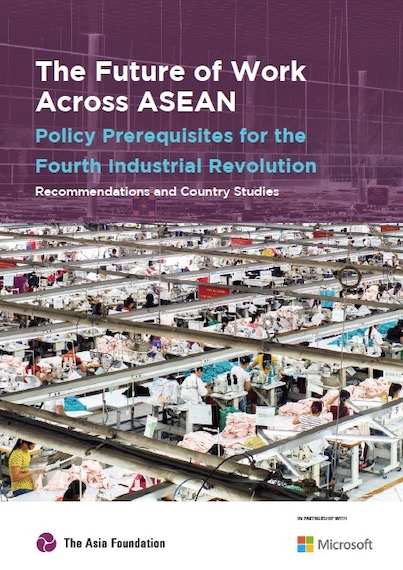
The Future of Work Across ASEAN
The Fourth Industrial Revolution (4IR) presents a variety of opportunities and challenges for the ASEAN region. With support from Microsoft, The Asia Foundation led a regional research program examining the…

The Fourth Industrial Revolution (4IR) presents a variety of opportunities and challenges for the ASEAN region. With support from Microsoft, The Asia Foundation led a regional research program examining the…

Barhta Pakistan (loosely translated as progressive Pakistan), incorporates a series of initiatives aimed at making cities more business friendly. Here are a some of the highlights: A platform for women…
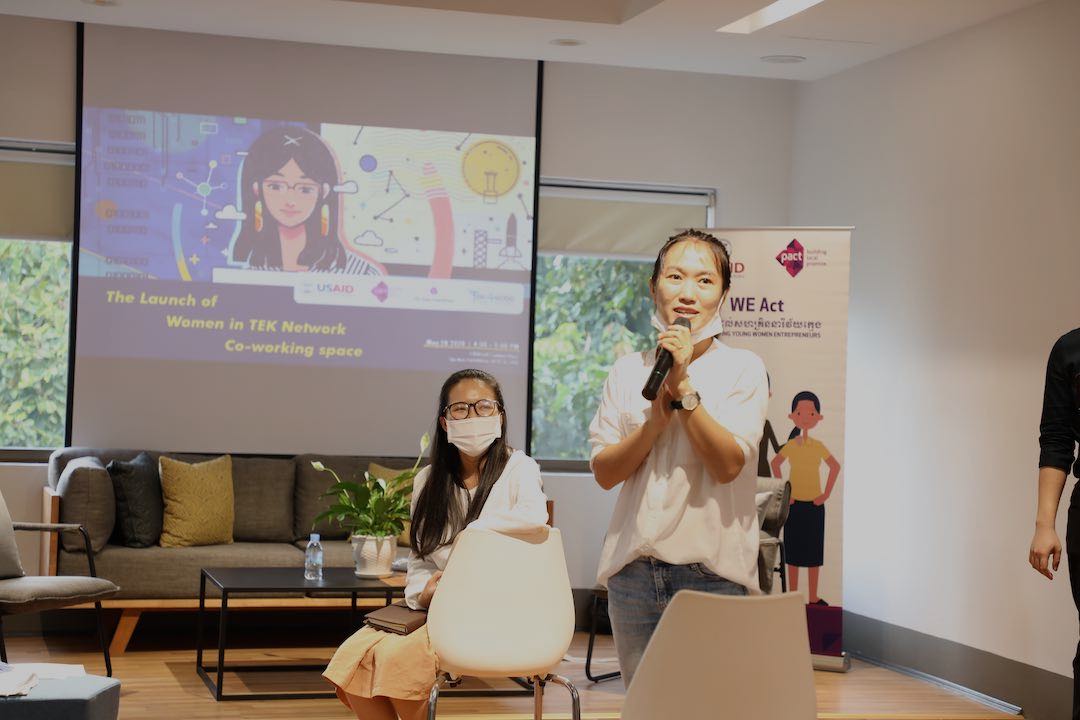
This conversation will examine how COVID-19 has hastened digitalization and technological innovation in labor markets, jeopardizing the livelihoods of many Asia-Pacific workers and increasing the need for dynamic, market-aligned upskilling…
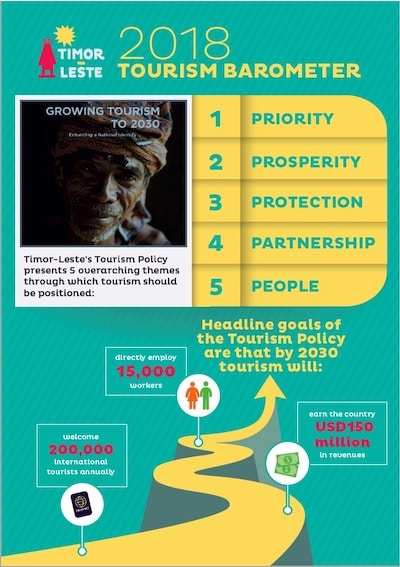
The 2018 Timor-Leste Tourism Barometer is the first of its kind for Timor-Leste. It was developed as a tool to identify opportunities and constraints of Timor-Leste’s tourism sector, providing a…
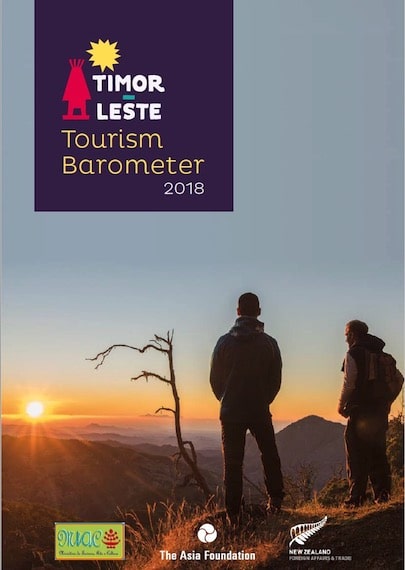
The 2018 Timor-Leste Tourism Barometer is the first of its kind for Timor-Leste. It was developed as a tool to identify opportunities and constraints of Timor-Leste’s tourism sector, providing a…

This report explores emerging internet technologies beyond those traditionally used for Internet connectivity in the Philippines, especially those that may benefit the unserved and underserved areas. Comprehensive research was conducted…
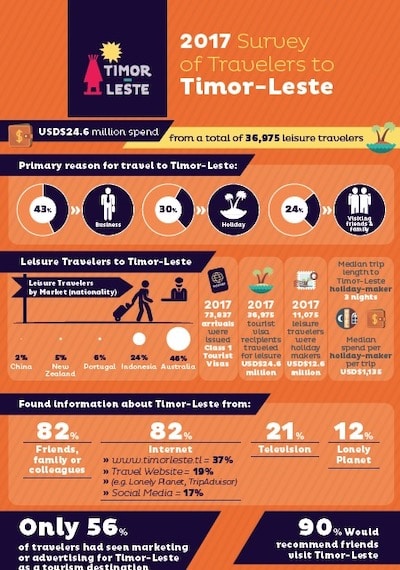
The 2017 Survey of Travelers to Timor-Leste provides insights into the country’s developing tourism industry. It reveals that almost 37,000 leisure travelers visited Timor-Leste in 2017, spending more than USD$24…
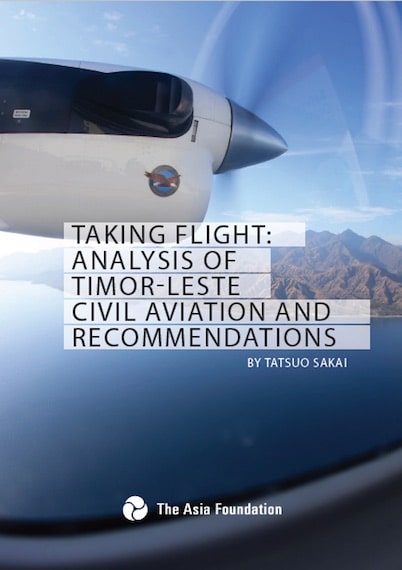
Timor-Leste faces numerous barriers to the growth of civil aviation, and by extension, its tourism industry. Problems range from essential regional and international connectivity and access, to the need for…
To contribute to better understanding of the politics of reform, The Asia Foundation, Developmental Leadership Program and Australian Aid published Room for Maneuver: Social Sector Reform in the Philippines. Exploring four important social sector reforms—anti-violence against women and children, reproductive health, freedom of information, and education governance—the cases focus on the institutional contexts, what happened, who initiated and persevered in their prosecution, and draws out why some succeeded and others failed.
Room for Maneuver may help development agencies and practitioners understand better that development of all kinds and in all spheres and sectors have technical and political dimensions and that using a technical lens without a corresponding political lens, and vice versa, will continue to be a serious limitation in improving the effectiveness of development assistance. This book is a follow on to case studies on economic policy reform.
This study was produced by the partnership of Australian Aid, Developmental Leadership Program, and The Asia Foundation.

That "politics matters" in development is canonical. The challenge confronting development agencies and practitioners is incorporating dynamic and complex political realities. Based on case studies of Philippine economic sectors, Built on Dreams, Grounded in Reality contributes to our understanding of reform and what international organizations can do to foster institutional change.
With a foreword by noted development author, Dr. Adrian Leftwich, the book gives an inside view of the political battles of five successful reforms: introducing competition in sea transport, civil aviation, and telecommunications; instituting the privatization of water service in the capital city; and introducing a law allowing faster titling of land. The book also documents two long-running reform efforts: improving tax administration and reforming the government corporation responsible for the stability of supply and price of rice, the staple of the Philippine diet. The book concludes with an operational approach to introducing reform called development entrepreneurship.
The book was published by The Asia Foundation with support from USAID and Australian Aid.