Building Cyber Resilience in Malaysia’s Underserved Communities

In a quiet village in Terengganu, a mother of three runs a small online shop selling handmade accessories. Every day, she manages orders, verifies payments, and promotes her products—all from her phone. Like many others in small towns and underserved communities, she’s vulnerable to cyber threats she doesn’t yet understand. One wrong click could compromise her accounts, stall her income, and expose her customers to risk.
Across Malaysia, as more people go digital, they face growing threats from phishing scams, data breaches, and device hijacking. In 2021, 84 percent of micro, small, and medium enterprises in Malaysia were the target of cyber threats, with 76 percent of them subjected to repeated attacks. Yet cybersecurity remains a distant concern for most micro-entrepreneurs, nonprofits, and everyday users, as online security is often perceived as the domain of large corporations or IT professionals.
That’s the narrative the APAC Cybersecurity Fund is working to rewrite.
Launched in 2023 by The Asia Foundation, or TAF, with support from Google.org, Google’s philanthropic arm, and in partnership with the Global Cyber Alliance and the CyberPeace Institute, the APAC Cybersecurity Fund, or ACF, is a regional effort to build cyber awareness and resilience among underserved communities. Operating in twelve countries across Asia, the initiative aims to train 600,000 people in basic cyber hygiene, equipping them to stay safer online and strengthening digital participation across the region.
Everyone Has a Role in Cybersecurity
The launch of the program in Malaysia reflects a core principle of the APAC Cybersecurity Fund: cybersecurity is not a luxury, but a fundamental right. In an increasingly digital world, online safety must be accessible to all levels of society—not just large corporations or government agencies. The fund is rooted in a deep commitment to digital inclusion, ensuring that even the smallest organizations and most underserved communities have the tools and knowledge to confidently and safely participate in the digital economy.
“When micro and small businesses, nonprofits, and social enterprises are better protected against online threats, the entire digital economy grows stronger,” Anthea Mulakala, senior director of International Development Cooperation at The Asia Foundation, said. “Cybersecurity is a critical pillar of economic resilience, especially in an era where digital participation is not optional, but essential.”
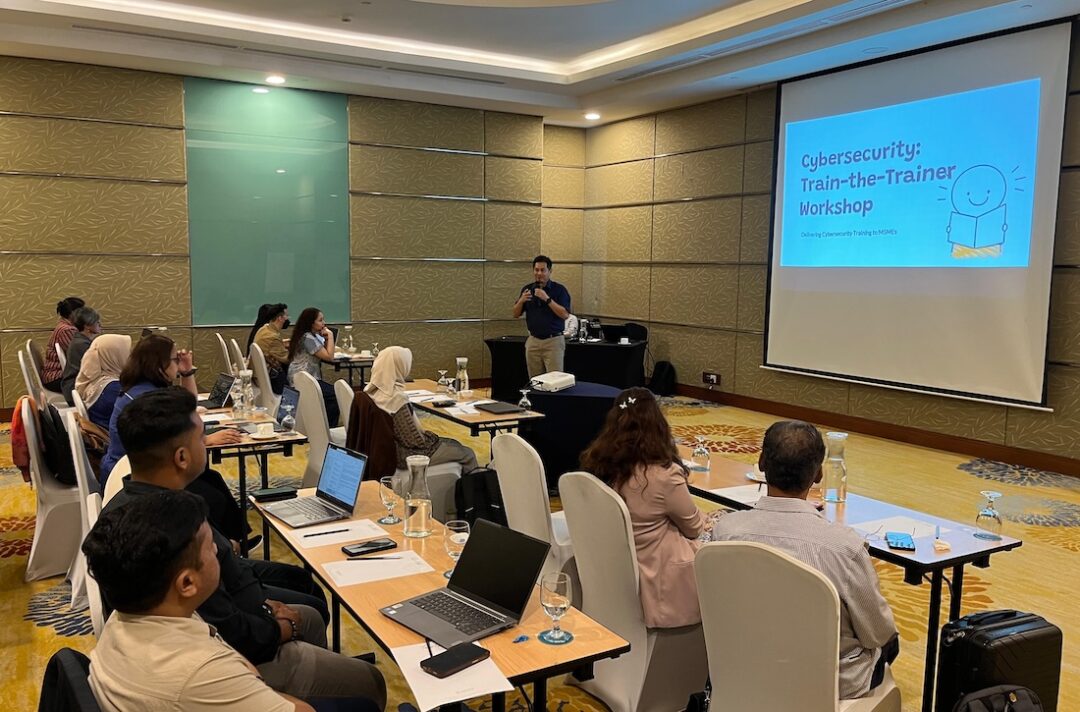
TAF kicked off its ACF program in Malaysia with a training of trainers workshop on May 9, after a yearlong effort to localize and curate the curriculum. The workshop in Kuala Lumpur brought together 12 selected individuals from diverse sectors and regions, equipping them not only with practical cyber hygiene knowledge but also with the tools to pass that knowledge on to their communities.
This train-the-trainer model is a cornerstone of the ACF. The program ensures relevance and sustainability by training leaders from within the community—individuals who understand the digital behaviors and challenges of those around them. The result: a multiplier effect that helps thousands more protect themselves against online threats.
Sarah Flora Anak Samson Juan, deputy dean of the Universiti Malaysia Sabah, was one of the trainers who participated in the event.
“Through the APAC Cybersecurity Fund’s Cyber Hygiene Training program, I hope to empower underserved communities and small businesses with the knowledge and tools they need to protect themselves against digital threats and scams,” she said. “By raising awareness and building practical cybersecurity skills, I hope I will be able to help create a safer digital space and support more inclusive participation in the digital economy.”
The curriculum focuses on fundamental, real-life concepts: identifying phishing attempts, creating secure passwords, managing devices safely, and protecting personal and organizational data. The goal is for 75 percent of trainees to report increased knowledge and confidence in cybersecurity, with half taking proactive steps within six months to reduce their digital vulnerabilities.
Malaysian Cyber Experts Lead the Way
To bring this initiative to life, TAF is working with a strong group of Malaysian experts. Trainocate and PEOPLElogy will lead virtual instructor-led training sessions, delivering high-quality content to participants across the country. Universiti Malaysia Sarawak, through its Faculty of Computer Science and Information Technology, will conduct sessions with community members and students, expanding the program’s reach across various sectors.
The program is also guided by Dr. Lau Sei Ping, who joins as master trainer and brings deep expertise in cybersecurity and community engagement. To support long-term scalability, Gizwiz Studio is developing a custom learning management system to serve as the platform for training delivery and participant engagement.
Ruby Kaur, managing director of Trainocate Malaysia, said: “This program is a critical step for Malaysia’s digital economy, making cybersecurity a practical skill accessible to underserved communities. By grounding cyber hygiene in local realities, we empower individuals to protect themselves and build a stronger digital future.”
The ACF program aligns with TAF’s broader work, which explores how emerging technologies and digital transformation can either widen or narrow inequalities. In Malaysia, the digital divide still disproportionately affects small businesses, grassroots nonprofits, and informal sector workers, many of whom lack access to basic cyber safety knowledge.
Cyber threats are no longer just IT issues; they are real risks with real consequences for people’s livelihoods. And as digital access expands, so must digital resilience.
The rollout of ACF in Malaysia is more than just a training initiative, it’s a call to action. It invites a broader conversation about cyber readiness as a public good and emphasizes that everyone, regardless of size or sector, has a role in strengthening our shared digital future.
Media Contact
Our development experts and staff in Asia, the Pacific, and the United States are available for media briefings and speaking engagements.
For assistance, please contact Strategic Communications:
Eelynn Sim, Director
[email protected]