Charting the Course: Bangladesh’s Small Businesses Make Pitch for Growth

Sharmin Sultana confidently stepped up to the podium. She cleared her throat, her lips eliciting a small smile. “As a faculty member at Daffodil International University, I saw firsthand the struggles students faced coming to Dhaka from different parts of the country,” she began, her voice gaining strength with each word. “Property owners here are often reluctant to rent to bachelors, forcing many students to live in truly poor conditions.”
A panel of esteemed judges sat in the corner of the stage. Their expressions bore a mix of concentration and encouragement as they listened intently.
“I saw this problem, and to help my students, I started Younic Homes,” Sultana continued, her eyes sparkling with pride. Younic Homes aims to provide affordable accommodation, meals, and other peripheral services to students and working professionals.
“Now, I’ve left the university and am working full-time to solve critical problems students and young professionals face in Dhaka: accommodation, healthy meals, and holistic services—all at a minimum price,” she said.
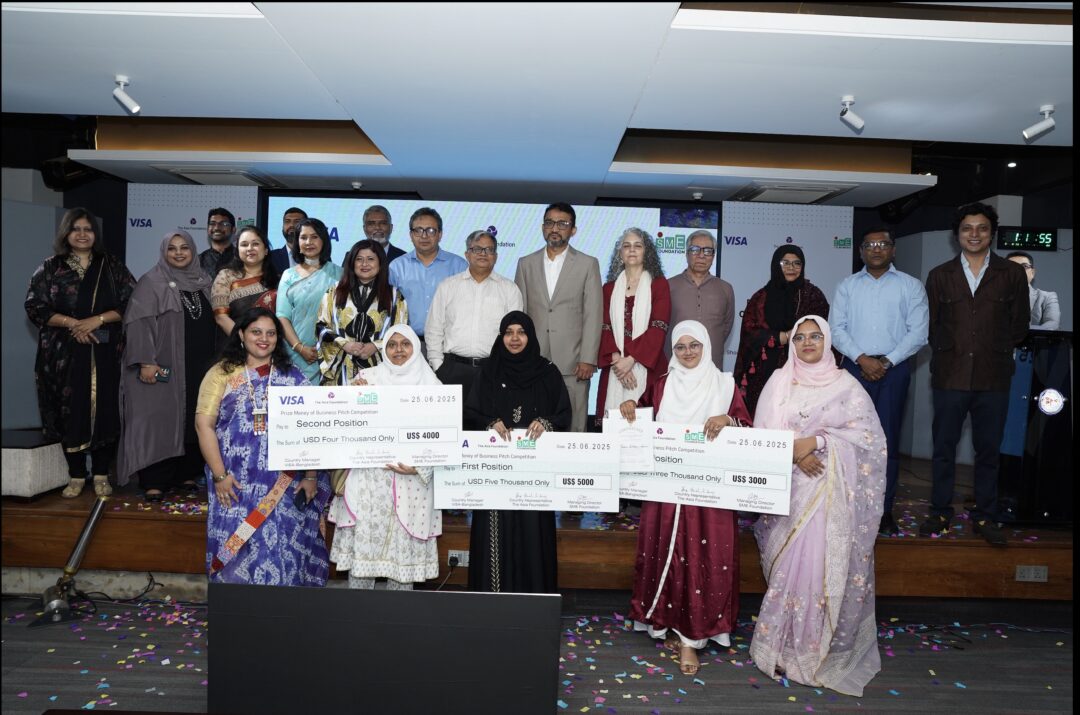
Sultana’s story was one of ten shared at the Business Pitch Competition in Dhaka on June 25. The event, co-organized by the SME Foundation, The Asia Foundation (TAF), and Visa, was a centerpiece of Bangladesh’s celebration of International MSME Day. The air buzzed with the spirit of entrepreneurship, particularly among women, as the nation championed the critical role of micro, small, and medium-sized enterprises (MSMEs) in its economic future.
The significance of MSMEs cannot be overstated. With the UN projecting 7 out of every 10 jobs by 2030 to come from MSMEs, and with this sector already accounting for 90 percent of global businesses, 60 to 70 percent of employment, and 50 percent of GDP, fostering a supportive environment for their growth is not just beneficial, it’s essential. For Bangladesh, a nation striving for inclusive and sustainable development, the health of its MSME sector directly translates to improved living standards, especially for the working poor, women, youth, and marginalized communities. It’s the backbone of livelihoods, ensuring economic progress reaches every corner of society.
The Business Pitch Competition directly addressed a critical challenge faced by MSME entrepreneurs globally: access to financing. By providing a stage for women like Sultana to showcase their innovative business plans and offering crucial financial support in the form of prizes, the competition served as a catalyst for growth. It helped transform promising ideas into viable businesses, directly boosting entrepreneurs’ confidence in advancing their ventures and securing funds.
From an initial pool of 92 applicants, 24 promising participants underwent a rigorous two-day residential training on business pitch techniques by the SME Foundation. This investment in capacity building is crucial, as it equips entrepreneurs with the skills needed to navigate the complexities of the business world. In the final round, 10 women entrepreneurs presented to an esteemed jury, with three outstanding ventures, including Sultana’s, receiving recognition and prize money.
Another participant in the competition, Takia Sultana Nova, ended her pitch stating, “I used digital tools and business skills that I learned in a training program.” That underscored the vital role of the support provided by the SME Foundation and TAF in equipping entrepreneurs with the practical knowledge they need to succeed.
At the award ceremony, Sara Taylor, visiting country representative for Bangladesh, articulated TAF’s commitment: “Today, we celebrate the vision, resilience, and innovative spirit of Bangladeshi women entrepreneurs. Their business plans are making their future brighter and more inclusive.
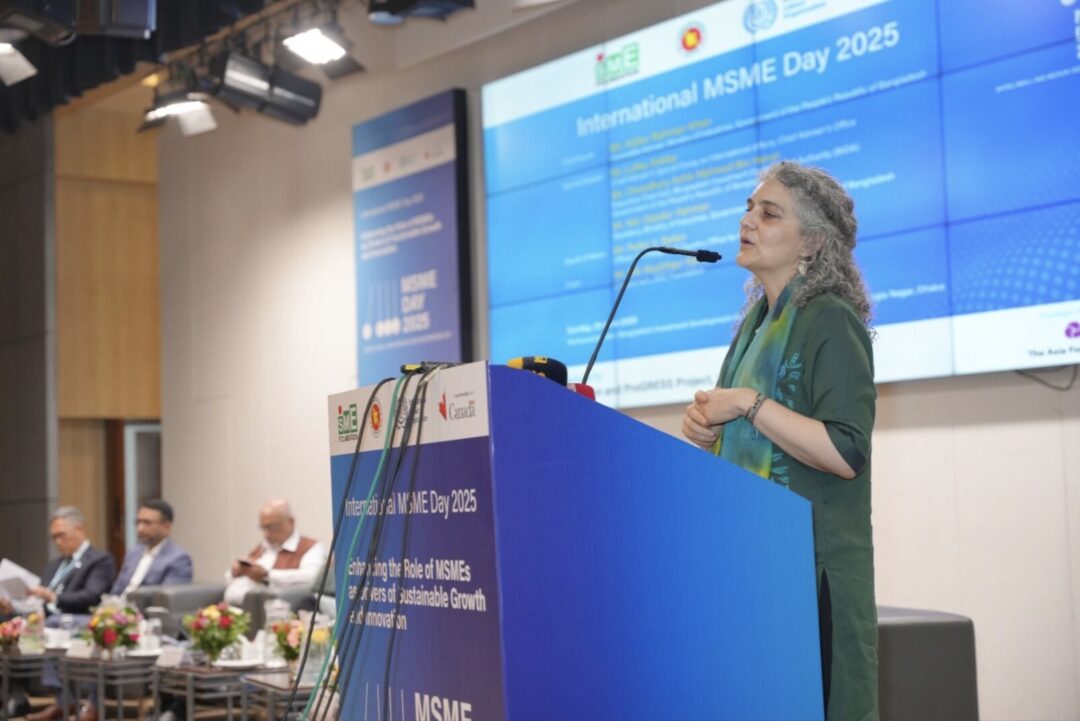
“We are proud to stand by them on this journey of turning problems into possibilities and helping them succeed,” she continued. “Even if you don’t win today, we urge you to keep moving forward, keep trying; you are one of the key drivers of sustainable growth in this country.”
This is the essence of the transformative impact of such initiatives—not just in terms of financial aid but in fostering a mindset of perseverance and highlighting women’s pivotal role in economic development.
Another symposium further amplified the critical importance of collaborative policy formulation for MSME growth. Chaired by the SME Foundation’s chairperson and attended by high-level officials, including the special envoy for international affairs to the chief advisor, the executive chairman of BIDA, and the Industries Secretary, it served as a dialogue among government officials, industry leaders, and development partners like the International Labour Organization. Such direct engagement is crucial because it allows for the identification of systemic challenges facing MSMEs, from financing difficulties to institutional limitations.
These meetings play an instrumental role in shaping the regulatory and support frameworks that ultimately determine the success and sustainability of the MSME sector. They ensure that policy is informed by entrepreneurs’ real-world experiences and the expertise of various stakeholders.
The Asia Foundation remains steadfast in its dedication to expanding economic opportunities for women like Sharmin and Nova and fostering an environment where all entrepreneurs can thrive, driving sustainable growth and innovation across Bangladesh.
Media Contact
Our development experts and staff in Asia, the Pacific, and the United States are available for media briefings and speaking engagements.
For assistance, please contact Strategic Communications:
Eelynn Sim, Director
[email protected]