How Transitioning from Coal to Renewable Energy Transformed a Mongolian Family’s Life
Thick, acrid smoke chokes Ulaanbaatar and its ger districts during the long winters when residents burn coal for cooking and heating. The toxic smog envelops the area for months at a time, making it one of the most polluted places on the planet and causing thousands of premature deaths each year.
However, a quiet transformation is underway—one yurt, or ger, at a time.
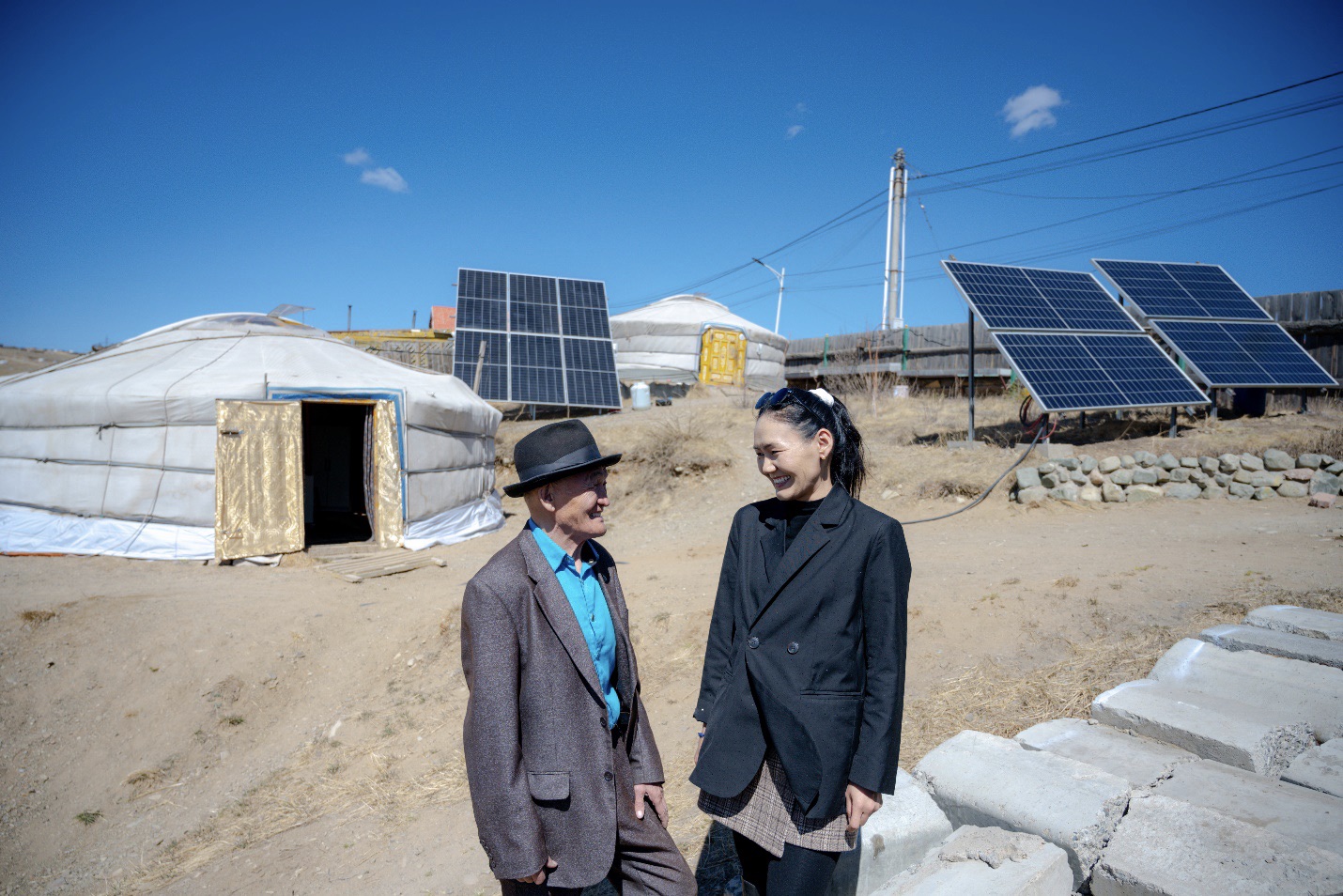
For Mr. Sambuu and his daughter, Ms. Davaajargal, it began in 2022 when they joined a pilot project supported by The Asia Foundation (TAF) in partnership with URECA LLC and GerHub NGO.
Since TAF’s partnership with URECA and GerHub on the Coal-to-Solar pilot project began in 2022, the initiative has been generating international attention and support from development banks and multilateral international organizations. Under the program, URECA and GerHub convert traditional ger dwellings by adding insulation and switching from coal stoves to electric heating systems with residential photovoltaic systems for their heating needs. According to URECA, by switching from coal to solar, households are preventing annual emissions of up to 15 tons, while also generating needed funds through carbon credit generation for scale-up purposes. The initial pilot transitioned five households and demonstrated the success of the technical design and solution.
In 2024, with generous funding from the Australian Department of Foreign Affairs and Trade, TAF launched the Women’s Climate Resilience project to expand the initiative through TAF’s Women’s Business Center, Mongolia’s first business service center committed to helping women entrepreneurs to start and grow their businesses, in Ulaanbaatar city and Uvurkhangai province. But what began as an effort to reduce air pollution has delivered benefits that go far beyond improving respiratory health.
A Daughter’s Leap of Faith
After the COVID-19 pandemic, Davaajargal became increasingly uncomfortable with burning coal. “I felt more and more guilty seeing the air pollution and thinking that I was contributing to it,” she said. In 2022, she joined GerHub as a community center manager and was invited to apply for the new solar pilot project. She didn’t hesitate.
“I had been looking for something like this for years,” she said. “When I found out I was selected, I was so excited.”
Her system was installed just before winter, and although she was nervous about making it through the cold months without coal—especially with a newborn baby—the experience quickly eased her doubts. “On the first day of Lunar New Year [2023], I did a ritual honoring the fire for the last time and removed the stove completely,” she said. “Since then, I haven’t burned coal in three years.”
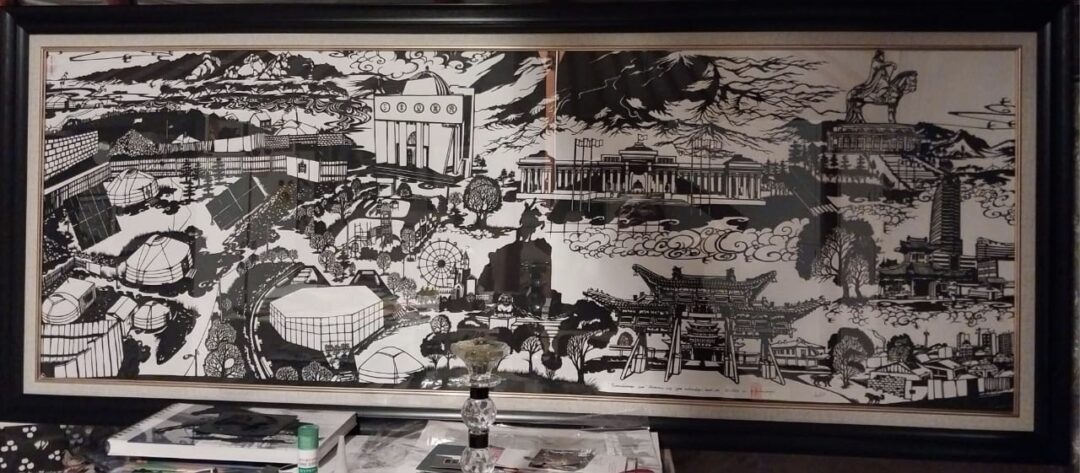
Beyond cleaner indoor air and the convenience of not having to tend to a fire throughout the day, the solar system gave Davaajargal more time and space for her passion: traditional paper-cutting art. “The dust from coal used to make it hard to work at home. Now, I can focus on my art, and I’ve seen improvements in the size and quality of my pieces,” she said.
“Moreover, as my time increases for my artwork, it has created more opportunities to design bigger versions and receive orders, helping my sales increase,” she added. “I was also able to showcase my work at the National Exhibition of Women Artists.”
A Father’s Second Chance
Mr. Sambuu initially turned down the opportunity to install solar panels, expressing skepticism that the system would work in the bitter Mongolian winters. But after witnessing the transformation at his daughter’s home, he changed his mind.
“I regretted my decision,” he said of his initial reluctance. “I told the team I wanted to be part of it, and in 2024, they installed the system at my home.”
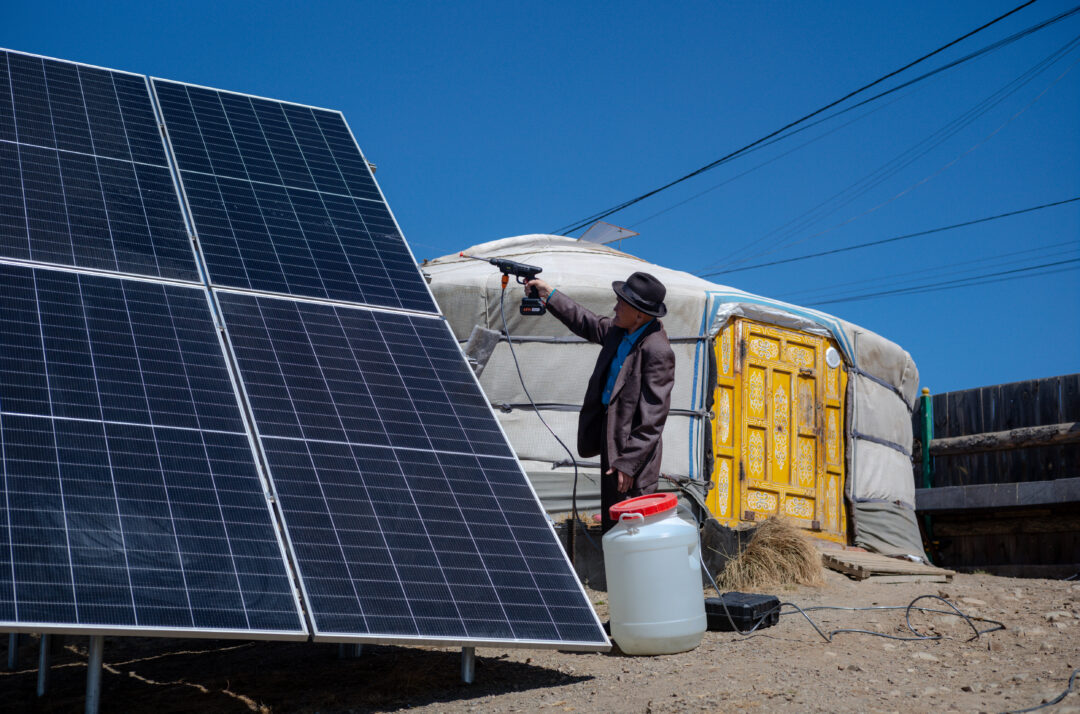
Now 62 years old and retired, Sambuu said he appreciates the simplicity and comfort the solar system brings. “It’s cleaner, quieter, and more spacious without the stove and chimney,” he said. “We used to burn 2 to 3 tons of coal every winter. That’s a lot of work I don’t have to do anymore.”
It’s a welcome change of tradition, he added: “Some people say it’s strange to see a ger without a chimney. But for me, as long as I’m living comfortably and cleanly, it doesn’t matter.”
With cleaner energy came newfound time. “I think this system is more beneficial to my daughter,” Sambuu said proudly. “She can concentrate on her art without worrying about coal, as well as both of us not worrying if younger children are at risk of at-home burning accidents with hot stoves.”
The human impact of the energy transition
Mongolia’s capital city, Ulaanbaatar, is among the world’s most polluted cities in winter, largely due to the burning of coal in ger areas. While the environmental benefit of the shift to solar is clear, it is also proving to be a deeply human story with profound impacts on health, dignity, opportunities, and empowerment.
Besides, Mr. Sambuu and Ms. Davaajargal, other women entrepreneurs and families living in ger districts in Ulaanbaatar have significantly improved their quality of life and business productivity after transitioning from coal-based heating to solar panel systems and insulation support. These women entrepreneurs are members of the Women’s Business Center and run home-based businesses such as handicrafts, jewelry-making, and sewing. With safer, cleaner, and warmer home environments, they have gained more time for themselves, their families, and their businesses, leading to increased income and productivity. Participants report better health, improved child safety, and reduced household burdens, illustrating the life-changing impact.
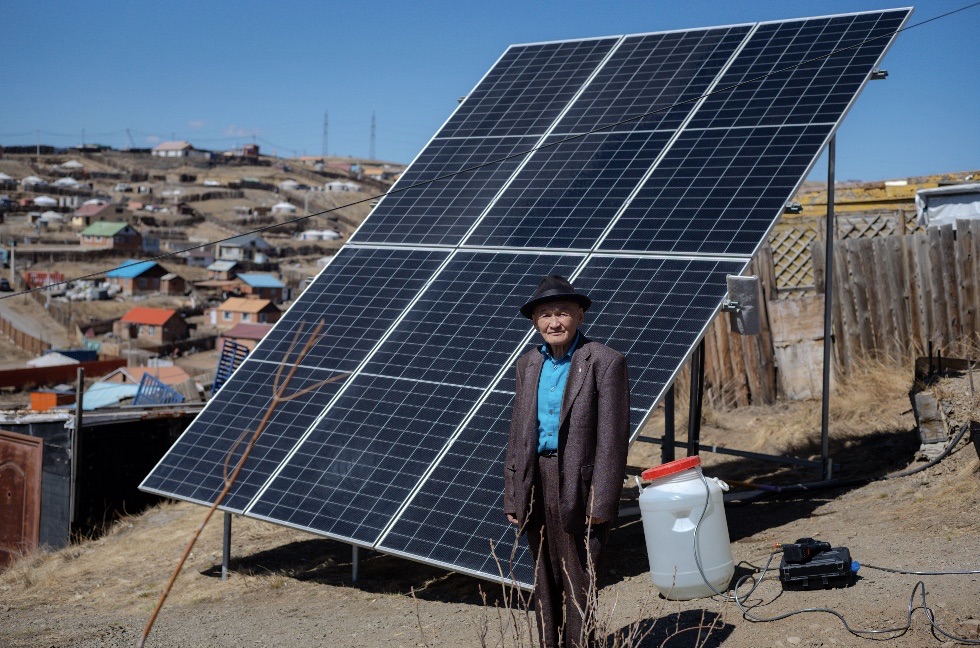
As featured in The Asia Foundation’s broader exploration of democratizing carbon credits in Mongolia, the Coal-to-Solar initiative is not just about emissions reductions but about putting tools into the hands of local communities to shape a more resilient future, especially now with the expansion of the program to women-led small businesses and women entrepreneurs. Families like Sambuu and Davaanyam’s are part of a living example of how this initiative can open new doors and provide unexpected positive impacts in their daily lives.
See more stories of women who have benefitted from the Coal-to-Solar project.
Watch the video below to see how the Coal-to-Solar pilot is changing lives in Mongolia’s ger districts—one panel, one family, one story at a time.
Media Contact
Our development experts and staff in Asia, the Pacific, and the United States are available for media briefings and speaking engagements.
For assistance, please contact Strategic Communications:
Eelynn Sim, Director
[email protected]